| OCR Text |
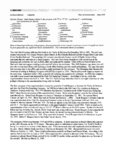
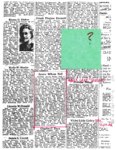
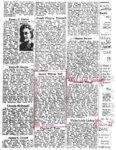
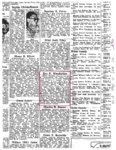
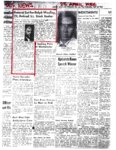
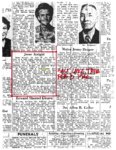
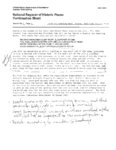
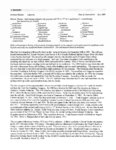
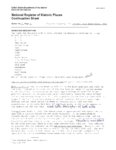
Show OUR TOWN dahl SIre 1, Mi"icen~t s) and tv a ,400 SOUlh ~e on 915 tlnued h'IS November sion with the soul of a poet, who has written :Iyrnns of praise that have been sung by the faith;~ l. Such a one was Jacob Johannes Martinus 'oh n, who expressed in poetry his conception of "uth and wrote most of the hymns which consti. :ute the first edition of the Latter-day Saints Book n the Danish and Norwegion Languages. I He was born in Aalborg, Denmark , April 27, she was 9 Was the of seven 'rge , JOh~ , Elizabeth 'ck Hugh and Har. :823. As a youth he joined the Baptists , but later !S I:ized, history records , as the first convert to The Jecame a convert to Mormonism and was bap- I farm in vas about tumbled Id end of to make )he Used j dirt for 1 I fields by Jht bUsh. r assign. beans in : two and Indeed Brother Bohn became the William W. Phelps of the Scandinavian Mission. After completing his Mission, during which he suffered many persecutions, he left his native land , with his young wife , Maria Bohn. This f together was in the latter part of 1853. They arrived in Salt Lake City on October 5, 1854. They settled in what is now west Murray, being the second family to locate there ; the Bergers having preceeded them. He continued to serve in the Cause which he had devoted his life to and answered the call of Brigham Young in the move South, settling Moroni , Cedar City and Beaver. They had four children , one son and three daughters. They later returned to Murray. nie went Jliar old lived in ! years. brother I sailed In along came a for her at the buried metery Always appreciating the finer things of life , he had shown a remarkable tendency toward oil painting, which , until now , he had never had the opportunity to develop. This was in the early eighties when canvas was expensive and only a few colors could be purchased . He, however, mixed his own colors from the few he could buy, and in his spa re time began to paint. -' history Nn from Ballard 31. ' since "ness ; temabor' d the Jspel )road Church of Jesus Christ of Latter-day Saints, in 8anders, Denmark, October 25, 1851, together ,vith his wife. A few days later he was ordained a Priest and assigned to labor as a local missionary ;n Jylland. He was ordained an Elder in 1852, and it was while thus laboring that he wrote the HymnS (many of which have been preserved in Church literature). Under the inspiration of the Almighty, his lofty mind and thankful heart created verse after verse explanatory of the truths of Heaven and praises to the Almighty for the restoration of the Gospel. Soon afterwards the verses were gathered together, prepared for the press and became the first Latter-day Hymn Book published in the Danish and Norwegion languages. J Later he spent nearly all of his time this way and soon gathered a large collection. His pictures, mostly of religious nature are: Christ Before Pilate , Jesus and the Doctors in the Temple; The Saints Crossing the Mississippi River ; Hill Comorah , were among some of his subjects. One was given to each of our Temples in Utah . Several of the Ward Chapels in Salt Lake County have his paintings. He was ordained a Seventy in the spring of 1861 and High Priest about ten years later. He 377 was always known for his integrity, high mindedness , intellectuality and sturdiness of character. He died March , 1900, at his home in Murray City. His funeral was in the South Cottonwood Ward . Bishop Joseph S. Rawlins, Elder Lawritz Smith, Apostle Anthon H. Lund and Charles Holm were speakers. A Danish-Norwegian male quartette from Salt Lake sang two of Brother Bohn 's compositions. (Material from family records contributed by Evelyn Mad· sen.) DAVID B. BRINTON (SUSAN E. HUFFAKER) Born February 23, 1850 in Savannah , Missouri, while his pioneer parents were preparing to cross the plains to Utah , under the westward migration plans of Brigham Young. Son of David Brinton and Harriet Woolerton Dilworth, he was the second son of seven boys and three girls. He was seven years old when they were told to leave their home in Holladay at the coming of Johnson's Army. At age 27 he was the youngest bishop in the LOS Church at that time. A position he held for 52 years , before being called to a two-year Mission to Eastern States. He operated a general store at 48th South and Hyland Drive - lumber, dry goods , groceries, meats, hardware and shoes. He had contracts to deliver mail and supplies to the mining communities in Big Cottonwood Canyon. These communities were Maxfield Mine, Brighton , Tanner's Flat and Alta. He contracted to furnish meat to Fort Douglas Army Post for many years. More than 6,000 acres of land were cleared of sagebrush and were brought under cultivation and became choice farming areas. He operated a heavy construction business, building many canals, reservoirs , dams, roads and buildings. He assisted in building of the Utah Central and Saltair Railroads, and carried out many timbering contracts. Dozens of foreign immigrants were assigned to him for work at his farm, shops, and construction projects while they learned English and became self-sufficient. The Brighton Post Office, 5900 South Highland Drive, served the canyon residents and the south east area of Salt Lake County. Located nearby was Brinton Ward of Cottonwood Stake , by which name it was known until it was changed to Cottonwood Ward , about 1927. He developed and operated many acres in the Holladay area, Wasatch County, and Idaho, where his land clearing projects were most successful. David married Susan Erepta Huffaker, of a pioneer Mormon family, and they had thirteen children , all of whom lived to maturity. He died Dec., 1929. |