| OCR Text |
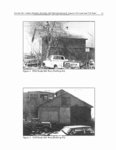
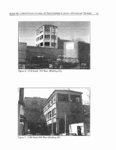
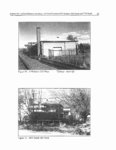
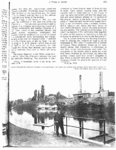
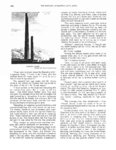
Show reagents are added to separate the other mineral or minerals. The name "selective flotation " is descriptive of this process. As a note of interest, the principle of flotation for separating minerals from waste rock was discovered only about forty-five years ago. Previously, gravity methods and certain chemical and electrical processes had been used, which were less efficient with many ores and which could not recover and concentrate others. Flotation was a tremendous gain. As an example, when zinc sulphide (sphalerite) was in mixture in the ore with lead sulphide (galena), the zinc could not be saved. Zinc was actually a waste material in Utah's mining, prior to 1925, when selective flotation made its recovery possible. The concentrate or concentrates, after being skimmed off the flotation cells, are passed through filters to draw off the excess water, and the concen trate is then ready for shipment to the various types of smelters. . The concentrates, although composed principally of one mineral, still contam other valuable minerals and metals. For instance, a lead con centrate will carry some copper, silver, gold and zinc, if the original ore carried minerals of those metals. The physical separation, however, has been accomplished to the extent that it is practical with present available processes and reagents. Smelting Concentrates The smelting process, by effecting chemical changes in the composition of the minerals, separates the metallic elements from others with which they were combined. The separation is accomplished through melting the concentrates in furnaces of various types and draining the molten metals and the molten waste (slag) separately from various levels near the furnace bottom. The molten metals, being heavier, go to the bottom. Coke or coal to promote combustion and various materials (called flux) are mixed with the concentrates before they are placed in the furnace. The fluxes serve to combine with the waste elements while the charge is melting to make chemical compounds and leaving the metals in a free molten state. The fluxes in most smelting operations consist of limestone, silica and iron or manganese, in such amount as is needed to make the necessary chemica l change. The furnace operator must know the chemical content of the concentrates in order to add the proper character and amount of fluxing material. If the melting mass is not of the right chemical composition, separation of the metals is incomplete and there is considerable loss of metals in the slag. Most ores and concentrates have a high sulphur content, which must be materially reduced before they can be placed in the smelting furnaces. They are mixed with coke and passed through mechanically operated roasting machines where flash heating drives off most of the sulphur. This process, in addition to driving off the sulphur, partially fuses the ore mass in a cake-like form called sinter. The sinter is then crushed and mixed with fluxing materials prior to placing in the smelting furnaces. Each smelting plant has large pipes and brick conduits leading to a high, narrow building resembling to some extent a grain elevator. This building is the "bag house" and the pipes and conduits leading to it are used to collect gases given off in the roasting and smelting processes. These gases are treated to remove the dust and minerals which form as the gases are cooled. The solids recovered are then treated, and numerous by-products are recovered. At the Garfield copper smelter, about 1440 tons (rated capacity of plant) of sulphuric acid is made each day from the sulphur recovered as a by-product. Arsenic, antimony and bismuth are other important by-products of Utah's smelters. The metal products of the smelter are still not pure enough to. use for manufacturing purposes and must be treated further . The lead bullIon and blister copper from smelters contain small amounts of other elements as well as the gold and silver which were melted out of the ore and concentrates. These elements require further treatment. Utah has one active copper smelter at Garfield. Its principal source of concentrates is the Kennecott Copper Corporation's Utah Copper open pit mining operation. The lead smelter at Tooele is operated in ~onju~ction with a zinc fuming plant, which extracts zinc from the hot slag bemg dlsch.arged from ~he lead furnace . Some of the cold slag in the old slag dumps IS hIgh m zmc and this material is also being processed for zinc recovery in the fuming plant. The end produ ct is zinc oxide which is shipped to other points for further refining. Utah is one of the most important nonferrous milling and smelting centers in the United States. Our many mines and mines in portions of Arizona, Colorado, California, Nevada, Idaho and Montana contribute to the ore supply of Utah's mills and smelters. Refining Metals Kennecott Copper Corporation's electrolytic refinery at Garfield, Utah refines the copper smelted from concentrates produced at the company's mills. T?e copper is first cast into anodes at the Garfield smelter. T?e foll?wIng bnef description from The Utah Copper Story outlines the electrolytIc refinIng process: "The refinery, completed in 1950, produces electrolytically refined copper, the purest ty pe. Anodes from the smelter are placed in lead-lined tanks containing copper su lfate and sulfuric acid. Then sheets of refined cop~er, called cathode starting sheets, are placed between the anodes. An electncal circuit is completed from the anodes through the copper sulfate and sulfuric acid solution to the starting sheets. As the anodes dissolve in the solution, the electrical charge transfers small particles of copper to the starting sheets. Impurities, including minute amounts of precious metals, fall to the bottom of the tank as mud. Precious metals are later recovered. "During the electrolytic action, the cathode starting s~e.ets become thic~er, the anodes become thinner, until about 15% of the ongInal anode remaIns. The cathodes, now 99.96% pure copper, are removed, washed, and taken to electric furnaces for melting and casting into new shapes." A plant addition to the refinery produces special products from some of the refined copper to supply western markets. All the lead bullion produ ced in Utah lead smelting is shipped to eastern refineries for treatment. It is refined by either electrolytic or furnace methods to produce salable lead. The zinc oxide produced at the Tooele smelter zinc fuming plant is also shipped to eastern plants for refining. The zinc concentrates produced in Utah's flotation mills are usually shipped to electrolytic zinc refineries in Montana. The zinc concentrates are "roaste.d" and the zinc then dissolved in sulphuric acid solutions. The other elements, Including minor amounts of gold , silver and other metals, are precipitated out of the solution. The zinc is then precipitated from the so lution in metallic form by electrolysis. It is now zinc metal, pure enough to be used in manufacturing processes. After the refining of each of the metals-copper, lead and zinc-there are residue materials containing many other metals and elements. These are sub- |