| OCR Text |
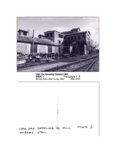
Show The full process, however, is actually very complicated and requires careful planning. Many men and considerable equipment are required to supply timber, compressed air, powder, water, tools, etc., to the mine crews breaking, loading and transporting the ore and to others engaged in mine maintenance and repair. Milling and Concentrating the Ore In underground mines all movements of men, supplies, equipment and ore are handled through shafts or tunnels in which the hoists or trains operate. Proper ventilation must be provided throughout the working places in the mine to exhaust the gases created by the explosives and to furnish fresh air to the workman . As a general rule, the minerals, after being mined, must be separated from waste rock to make them usable to industry. However, there are a few, such as sand and gravel, natural gas, cinders, perlite, pumicite, coal and some of the brick clays, which are used as mined, although even with these materials, washing, crushing and / or sizing are sometimes necessary. Planning and directing a mining operation, either underground or open pit, is a highly specialized business, requiring engineering training, practical experience and good judgment. The jobs in mining require men with skill in mining, timbering, equipment handling and a knowledge of the various ores and types of rock. Complex processing is usually required for the metals because the minerals containing the metals are generally found scattered (disseminated) through hard rock from which the minerals have to be separated. Lead, zinc, copper, gold and silver are often found closely associated in the ore. So to recover the maximum amount of each such metallic mineral, they must be separated as complately as possible from each other and from the waste rock. This phase is known as milling and concentrating. Mines do not compete against each other in the sense that each tries to produce a better and more salable product than the other. To illustrate: copper, lead, zinc, pig iron or steel ingots produced from the ore of any mine are refined to set standards of purity and are sold for industrial use on the basis of those standards. The competition of mines is against the price being paid for the metals they produce. Every mine contains ore of varying grades in terms of metal or mineral content, and gains in terms of efficiency and lower cost change some of the lower grade mineralized rock to minable ore. This prin ciple is well illustrated in the fact that Kennecott's Utah Copper open pit operation at one time could not afford to send to the mills ore which carried less than 0.8% copper (16 pounds copper per ton). By constant improvements over the years they can now send to the mills ore which contains copper as low as 0.4% (8 pounds copper per ton). The average grade of all ore mined at present in the copper open pit is about 0.725% copper (14.5 pounds copper per ton), so it is obvious that most of the minable ore would have been exhausted and the mine abandoned long ago if substantial improvements in efficiency had not been accomplished over the years. In mining operations development work is usually being done in areas extending outward and downward from the places where ore is being mined, for the mineralized area has not usually been fully developed when actual mining begins. The life of a mine depends upon the efficiency of the operation and the success of the de velopment work carried on while mining is in progress in finding new ore reserves. Price of the metals and minerals is also a great fa ctor in determining the life of the mine, for it is readily apparent that a rise in price would permit the mining of lower grade ore and, conversely, a lowering of price would change some ore to unprofitable rock. As an example of the effectiveness of the prospecting, exploration, development and mining cycle, Utah has, since lead mining began about 1870, produced about 5,000,000 tons of lead. However, during that 85-year period the mines, at anyone time, have never had more than two or three years' supply of ore available as proven ore reserves . Exploration and development have been continuous and ha ve succeeded in adding new reserves as the proven ore was mined out. As a measure of the importance of exploration to the life of mining, "The President's Cabinet Committee on Minerals Policy," in its report to the President, Nov . 30, 1954, page 14, states : 16 "Today's mines are the result of exploration, development and risk taking over a period of many years. Exploration for mineral deposits often requires substantial venture capital ... much of it a total loss." Transportation costs are important in mining economics, particularly in moving the ore from the mine to the mill and the concentrates to the smelter. The mill man 's problem is to recover the maximum amount of mineral from the ore and to concentrate it into a small bulk for shipment to the smelter. He does a great deal of testing to determine the most economic balance of recovery and concentration of the minerals for the particular ore being treated, and testing is usually carried on during the entire operation to improve the recovery and to eliminate more waste. The effort to lower the cost in the competition against price is as important in the mill as in the mine. Milling is essentially a physical process, one of separating valuable material from waste rock, and usually no chemical changes are made in the mineral particles. In the separation process one or more types of concentrates may be produced, depending upon the minerals present in the ore. Briefly the milling process is as follows: The ore is crushed to particles having a maximum size of about one-half an inch. The ore is then fed with water to ball or rod mills where steel balls or rods in a rotating, heavy steel drum grind the ore to the size necessary to free the mineral particles from the waste rock. The size to which the ore is ground is controlled by "classifiers" which receive the discharge from the grinding mills and which, through a raking action, keep the fine ore agitated. The particles too coarse to be carried over the classifier overflow are raked back and returned to the grinding mill. The desired size of the material in the overflow from the classifier can be very closely controlled through the amount of water used and the speed of the raking action. The classifier overflow material is mixed with certain chemicals and oils (flotation reagents) which attract the mineral particles. While the finely ground ore (called pulp) is passing through the flotation machines, these chemicals and oils rise to the surface, gathering particles of mineral, and are there skimmed off as concentrates. The amount of reagents and the time allowed for contact of the reagents and the mineral particles in the flotation cells are the important factors (;ontrolling mineral recovery. There are reagents which will attract but one specific mineral, so where two or more concentrates are to be made, one mineral is separated first by use of the proper reagent, then, as the "pulp" moves on through the flotation cells, other 17 |