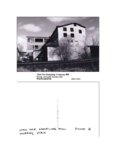
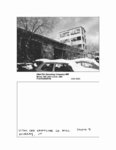
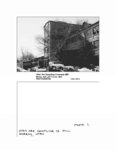
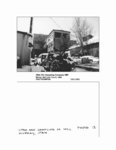
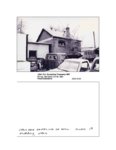
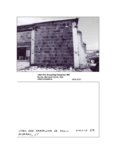
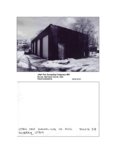
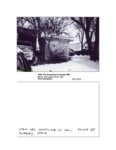
| OCR Text |
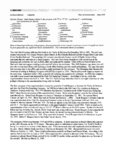
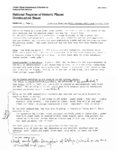
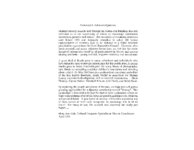
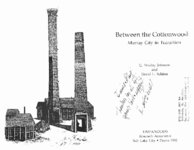
Show OMS No . 1024-0018 . NPS Form United States Department of the Interior National Park Service National Register of Historic Places Continuation Sheet Section No. ~ Page ~ Utah Ore Sampling Company Mill , Murray, Salt Lake County, UT greatest period of transformation occurred in the decade between the arrival of the Utah Southern Railway (later purchased by Union Pacific) in January 1870 and the Denver & Rio Grande Railway in 1881 . Branch lines soon ran from the mines in the canyons to smelting operations in Sandy, Midvale, and Murray. Due to an abundance of water, seven different smelters were built in Murray alone during this period. The largest, the Germania Lead Works , was established at approximately 5200 South and State Street. The American Smelting and Refining Company (ASARCO) purchased and consolidated Germania and the remaining smaller smelters between 1899 and 1902. Murray leaders had lured ASARCO with promises of free land and water rights. The smelter would dominate the city's economy and its skyline for the next three decades. ASARCO dismantled the Germania works, leaving a slag heap as the only reminder of the earlier smelter. When the ASARCO's Murray plant at 5300 South and State Street was completed in 1902, it was the most up-to-date and largest lead smelter in the world , with a capacity of 1200 tons of lead per day. ASARCO processed lead and other ores between 1902 and 1950, and was the largest employer in the city and much of the surrounding area. The presence of the smelter drastically changed the formerly rural community. There was a large influx of immigrants between the 1890s and 1920s. Most were Greek, but they also came from Sweden, central Europe, Australia and England. Many descendants of Murray's pioneer families also found work in the smelter. The immigrant smelter workers lived in shantytowns located on the west side of Murray near the railroad tracks. The generally poor living condition of the workers was one of the factors that resulted in the incorporation of Murray in 1902. Another factor was the general rowdiness associated with living in a town that reputedly boasted forty-seven saloons. Though in the beginning Murray consisted of scattered farmsteads, soon after the smelting industry arrived a commercial business district and residential neighborhood were established between Vine Street and 4800 South (formerly Murray Boulevard) near State Street. In the five years from 1884 to 1889, the number of general stores in Murray jumped from two to nine. By 1902, the commercial business district had developed into a small urban center with a number of specialty shops (confectioners, bakeries, shoemakers, jewelers, dressmakers, furniture , pharmacies, etc.). Rows of brick buildings (along with a few older frame ones) lined State Street housing not only retail shops, but also a number of hotels and restaurants. After incorporation, Murray developed into a small industrial city with its own power plant, water works and school district. Between 1900 and 1940, the population grew slowly and steadily from just over 3,000 to nearly 5,740. The ASARCO smelter operated intermittently through the 1930s and 1940s, with a short period of intense production during World War II . The smelter gradually moved its operations to other locations and the Murray plant was closed for good by 1950. In general, Murray was able to weather the closure of the ASARCO smelter due to a number of factors . During the depression years when the smelter was running at a reduced capacity, many workers, both foreign and non-foreign born , gravitated to alternate occupations, did odd jobs, or had family.garden plots to supplement their income. Many returned to large-scale agricultural production, which had not ceased despite the presence of the smelter. Specialized agricultural enterprises sprang up all over the city. During the first half of the twentieth century, agricultural production shifted from subsistence farming to specialized enterprises. Several truck farms were located in the southwest portion of the city, many started by former smelter workers. There were also several dairies, poultries, woolgrowers, fish |