| OCR Text |
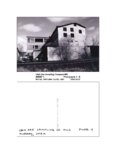
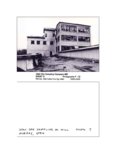
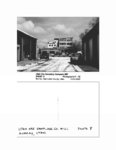
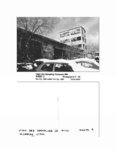
Show HALLOYSITE CLAY: Produced by Filtrol Corporation from the Dragon Consolidated mine, Tintic district, and processed at the company's Salt Lake City plant for use as a catalyst in oil refining in the Salt Lake area and on the Pa cific Coast. Input capacity of the plant is about 60,000-70,000 tons of clay per year. LIME AND LIMESTONE: Most of the crushed and pulverized limestone used in Salt Lake County is imported from Tooele County quarries. Salt Lake County is the state's biggest producer of lime. The largest plant is a part of Kennecott Copper Corporation's Utah Copper Division operations. Crushed limestone from Utah Lime Division of the Flintkote Co., which operates in Tooele County, is hydrated to milk of lime in the Kennecott plant and consumed by the company in the treatment of copper ore. The company also sells small quantities of quicklime to other consumers. Kennecott's output usually accounts for about two-thirds of Utah's lime production. Utah-Idaho Sugar Co. uses about 5,000 tons of limestone from Juab County each year for manufacturing quicklime at its Salt Lake City sugar refinery. The quicklime is used in the sugar refining process. OIL: While Salt Lake City is widely known as an oil refining center, only one refinery actually operates in Salt Lake County . The others are all north of the Davis County line. The American Oil Co.'s plant refines oil piped from the Rangely Field in Colorado and from the Uinta Basin in eastern Utah. This is one of the county's major industries. PERLITE: In the 1950s there were three perlite expanding plants in Salt Lake City. One burned down and one closed for economic reasons. Acme Lite-Wate Products, Inc. is the only firm in the county with expanding fa cilities. It uses perlite from the North Pearl Queen Quarry of Henry Schoo in Beaver County and from Nevada properties. The expanded product goes into the manufacturing of building plaster, concrete aggregates and soil conditioners. Vermiculite Intermountain uses perlite from Beaver County in the making of insulating materials. PHOSPHATE ROCK: Processing of phosphate rock, once chiefly from Wyoming, but with a steadily increasing volume from Utah's deposits, is one of Salt Lake County 's new industries. Stauffer Chemical Co.'s Fertilizer Division is operating a large plant at Garfield, with a production capacity in excess of 200,000 tons per year of treble superphosphates, phosphoric acids, ammoniated phosphates and other products. A large percentage of the ammonia from U. S. $tee\'s nitrogen plant in Utah County and the sulphuric acid produced at Garfield is consumed by Stauffer. Phosphate rock for the operation comes from Rich County (via a W yo ming processing plant) and Uintah County , with most of it being furnished by the Vernal operation of San Francisco Chemical Co. PUMICE: This mineral is imported from central Utah counties, from Idaho and other states for use as a lightweight aggregate by Buehner Block Co., Otto Buehner Concrete Products Co., Prince Block Co. and Rockymountain Refractories. RESINS: Fossil resins processed at Bauer, Tooele County, by Combined Metals Reduction Co. from waste coa l fin es from U. S. Fuel Co.'s Hiawatha , Carbon County mines, are sometimes used in small volume for paint manufacture by Bennetts. SHALE: Expanded shale quarried and processed in Summit County has found a large market in Salt Lake County as a lightweight aggregate for manfacture of concrete bricks, blocks, etc. Some of the major users are Prince Block Co., Utah Concrete Pipe Co. and Buehner Block Co. This mineral has largely replaced pumice for these uses. STONE: Some of the major importers of stone in Salt Lake County are: National Stone Suppliers-Black marble, pink travertine, cream travertine and snuff-colored onyx from a deposit at Pelican Point, Utah County; green onyx, white marble and brown-and-white marble from a quarry five miles west of 68 Nephi, Juab County; black obsidian fr om a p~'operty 25 miles northeas~ of Calleo, in Tooele County; white dolomite and white quartz from a depOSit 16 mlles west of Wendover, in Nevada; pink and cream combination marble from Low, Tooele County; buff jasper and red jasper from a qu arry west of Al~me , Utah County; green marble and yellow marble from Table Top Mounta1O , Tooele County; quartzite in gray, green and brown-and-green from Park Valley deposits in Box Elder County, and sandstone (picture rock) and brown marble from the Vernon area, Tooele County. Utah Calcium Co.-Aragonite from Tooele County, travertine from Meadow, Millard County and quartzite from the Park Valley area on the Utah-Idaho border. . Dura-Crete, Inc.-Chocolate onyx from Nephi, Juab County; hght tan and beige stone from Weber Canyon , quarried by Clarence Waterfall Co., and quartzite from Skull Valley, T ooele County. . Aggregate Supply, Inc.-Crushed marble from the. Creme Travertme Quarry, Utah County, and from Box Elder and Tooele counties. . American Stone Co.-Limestone building blocks from a quarry near Ephraim , Sanpete County, considered highly unusual for their whiteness. . Otto Buehner Concrete Products Co.-Obsidia n from a quarry near Nephi and crushed marble, granite , sandston e and jasper from va rious so ur~es . ThiS firm also has secured tonn ages of cru shed red, green, yellow a nd white stone from Thompson's Quarry, Iron County. Skyline Building Supply Co.-Onyx a nd agate from sev.era l sources and quartz from a quarry in Box Elder County, to furnish stone chips for cast stone products. Wilford H. Hansen Stone Quarries, Inc.-Sandstone from Wasatch County for dimension stone and flagston e. . Intermountain Stone & Marble Co.-Dimension stone from vanous sources in Utah and outside the state. VANADIUM: During the 1962-64 period, Vitro Minerals & Chemical Co., a subsidiary of Vitro Corp. of America, converted its Salt Lake City plant from uranium to vanadium produ ction . The raw matenal consists of slags from elemental phosphorous furnaces in Idaho, containing significant quantitie~ of vanadium. The company is producing 3,000,000 to 3,500,000 pounds of vanadIUm pentoxide annually, most of which is used as an alloy in steel making. VERMICULITE: Obtained from Libby, Montana and processed by Vermiculite-Intermountain, Inc., Salt Lake City, into an insulation material sold throughout the intermountain area. VOLCANIC GRITS (Cinder.s)-I:np~rted from the Fillmore area of Millard County and used as an mgredlent 10 hghtweight aggregates for making concrete blocks, bricks, and ornamental concrete products. SAN JUAN COUNTY Area: 7,761 square miles. Population: 1960 census, 9,040; 1965 estimate, 8,000. Active companies, 1965: mining, 66; primary min eral pro cessing, 1~ Average number workers 1965: mining, 330; pnmary mmeral processmg, . . . . Annual worker payroll, 1965: mining, $2, 147,306; prim ary minera l processing, ... '. Minerals history: Copper and copper-silver ores were discovered in. the La Sal district as early as 1886, a nd the first lo cation was made in 1888. Little mmmg was done until 1896-97, when the Tornado deposit was found and ~ small stamp mill installed in Miners Basin. There was only token productIOn , however, and the mill closed permanently within a short time. Considerable prospecting and development work was don e under t he stim ulu s of high cop per p~'i ces j ~st prior to the decline of 1907. It was during this period that the Big Indian *np.notes figures not available. 69 |