| OCR Text |
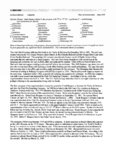
Show slow in developing-a fact attributable partially to transportation, but principally to lack of markets. Many mineral deposits, like iron, have lain undeveloped for many years while waiting for markets to develop. The same is true of the nonmetallic minerals which generally require low cost transportation and relatively nearby markets. Growing markets in recent years, both nation-wide and in nearby areas, have greatly stimulated the demand for Utah's minerals. Deposits of previously uneconomic minerals have been developed, production of other minerals and metals increased and many mineral processing plants established. Markets, particularly those in the nearby Rocky Mountain and West Coast states, promise continued rapid growth. Logically, the demand for Utah minerals and products made by Utahns from Utah's minerals and metals will share in that growth. THE MINING CYCLE. Basic Functions of the Mining Industry Mining is commonly assumed to be simply the process of extracting ore from the ground. It is much broader, however, in that finding, testing and developing of ore deposits precede the actual mining. Milling, smelting and refining follow after mining in order to separate the metals and minerals from worthless rock and put them in a usable form. A listing and brief discussion of the various phases of the mining industry is presented in the following paragraphs : Prospecting and Exploration for Minerals and' Metals The earliest prospectors probably looked for stones of the right shape and size to perform simple jobs, or searched for certain types of stones which could be readily shaped and which were hard enough to wear well. Copper, tin, lead, gold, silver, iron, clays and certain building stones later became objects of the prospectors' search, as these minerals became useful and valuable coincident with man's increased know-how and skill. The Bible and other ancient records mention early use of these metals and minerals. The present day prospector has a multitude of minerals and metals to look for in our highly specialized industrial era, and in our American free enterprise system those who prospect and explore for metals and minerals do so at the risk of their own money and effort. There are many failures for each success, but the rewards for success are often substantial. In drilling for oil it has been estimated that there are about nine "dry" or unproductive holes for each one which proves to be a producer. In metals it is not possible to make a statistical comparison of the successful and unsuccessful ventures. However, the risk nature of prospecting and exploration is illustrated by the fact that many prospects prove valueless ; further by the fact that many mines are worked unprofitably in the hope that through continued digging, better grade ore and larger deposits will be found. The mere presence of ore does not prove the existence of a profitable mine. The deposit must be explored through drill holes, sinking of shafts, or running of tunnels to determine size of the deposit, its grade and character and physical features affecting mining and marketing costs. If these factors are all determined favorably (up to this point all cost of prospecting and exploration has been a risk, for there is no salvage value in an uneconomic deposit) , the next step is development, for exploration stops when a mineral deposit has been determined to have real economic value. 12 T~ANSPORTArIOt.l BAS I( FUNCTIONS OF" THE. MI NINe INDUSTRY 13 |