| OCR Text |
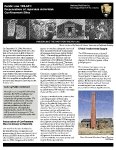
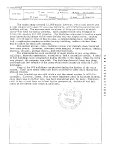
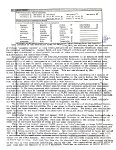
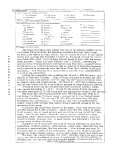
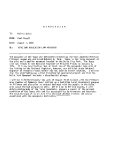
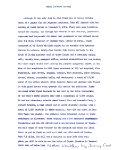
Show 8 vegetables. Historical Significance of Topaz Relocation The next year, the last springfrost was May 4, but the first killing frost in the fall was September 16, and this destroyed many of the tomatoes, peppers, eggplants, cucumbers, cantaloupes, and squash. The cool evening breezes of the summer were pleasant for the residents but kept plants from growing rapidly, and often the wind blew hard with damage to some of the crops. Meanwhile, the flaming skies of summer baked the soil, and a -good stand of carrots was virtually impossible. In the spring of 1944, it stormed 59 days between January and June, delaying much of the field work. Irrigation also proved to be a problem. The quality of the soil was such that, either the farmers irrigated too much and had poor drainage, or irrigated too little with insufficient moisture for growth. Perhaps the most significant activity of the center, in terms of long-range goals, was education. Almost 3,000 students passed through the Topaz school system and more than 1,000 eventually emerged as high school graduates. The center school system was accredited by the Utah State Board of Education, and the pupils were able to transfer without loss of credit to schools outside the center. Impossible as it might seem, the Pahvant encampment was the headquarters of the Buddhist Church in America during the war - its headquarters having been transferred to Topaz from San Francisco. Comprising 40 percent of the residents, the Buddhists joined with the Christians who represented another 40 percent, to form an interfaith council. It was said to be the only merging of these two faiths in the world. In addition to two Buddhist and four Protestant "churches".with separate services in English and Japanese, there was also a "church" shared by the Seventh Day Adventists and the Roman Catholics. The administration permitted complete freedom of religious worship except for the practice of State Shinto, the one sect which involved worship of the Emperor and provided justification for Japan's aggressive expansion. The interned Japanese Americans had one friend still on the West Coast who did help them get out of concentration camps. young lawyer in San Francisco. His name was James Purcell, a After the Pearl Harbor attack, Purcell quickly saw the injustices heaped upon the Japanese Americans. He protested against the evacuation, and represented, without fee, State civil service employees who were discharged purely because of race. of the entire evacuation order. Finally he decided to challenge the -constitutionality It took a long and painstaking search to find precisely the former California State employee he wanted for a test case. was Mitsuy Endo, who had been dismissed from civil service. She had never attended Japanese language school and could neither read nor write Japanese. dual citizen. She had a brother in the United States Army. She She was not a Her family did not even subscribe to a Japanese language newspaper. Purcell filed a writ of habeas corpus on behalf of Miss Endo, contending that the War Relocation Authority had no right to detain a loyal American citizen who |