| OCR Text |
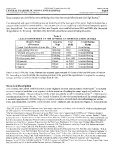
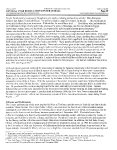
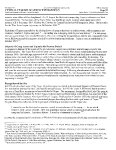
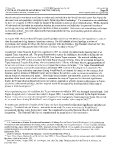
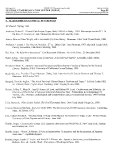
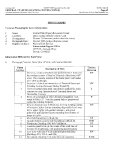
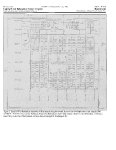
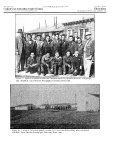
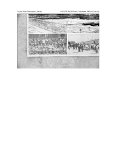
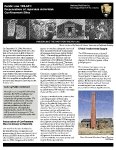
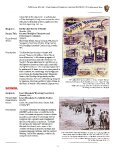
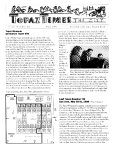
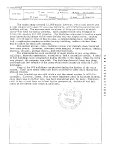
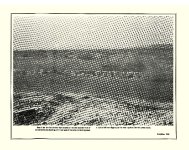
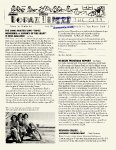
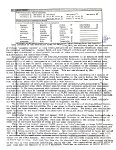
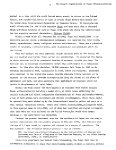
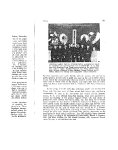
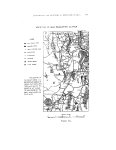
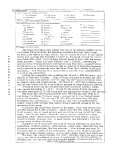
Show NPS Form 10-900 USDIINPS NRHP Registration Form (Rev. 8-86) OMB No. 1024-0018 CENTRAL VT AH RELOCATION CENTER SITE (TOPAZ) United States Department oftbe Interior, National Park Service Page 30 National Register of Historic Places Registration Form lake, shimmering in white moonlight." The first group of 502 regular evacuees arrived in Millard County on September 17 and the last evacuees entered on October 15,1942 (See Figure 23).72 Background of Evacuees Topaz was the eighth ofthe ten relocation centers to open and the fourth earliest to close, remaining in operation just 1,147 days. The "forced growth" community, as Trek referred to it, posted the third shortest days in operation of the ten camps. The peak resident population for Topaz occurred on 17 March 1943, when 8,130 persons were present. Table 2 shows trends in the camp's population during its course of operation. 73 Close to two-thirds (62.3 percent) of Topaz residents were American-born citizens; 37.7 percent were foreign born. In terms of age, 31.8 percent of Topaz residents were under twenty years of age at the beginning of 1943; 63 .8 percent were twenty through sixty-four, and 4.4 percent were sixty-five and older. The population pyramid forming the "tree" on the masthead of the Topaz Times vividly illustrated two age bands corresponding to the Issei and Nisei within the center. 74 In terms of their place of former residence, Topaz residents overwhelmingly came from California (96.2 percent), with 2.6 percent from Hawaii, 0.5 percent from other states, and 0.7 percent of unknown origin. Most of the California evacuees came from the northern part of the state, particularly from counties in or near the San Francisco Bay region: Alameda, 3,679; San Francisco, 3,370; San Mateo, 722; Santa Clara, 135; and Contra Costa, 129. Twenty-four other counties sent fewer numbers of residents to Topaz. In terms of city size, 72.1 percent of Topaz inhabitants came from medium to large cities (cities between 25,000 and 999,999 in population). Nearly 17 % of residents came from smaller cities (between 2,500 and 24,999 persons), while less than 10 % came from places with less than 2,500 people. Most of the urbanites were from cities in the Bay Area, East Bay, and Peninsula; only 248 of the persons sent to Topaz were identified as farmers. 75 Table 2 Central Vt a h R eI oca f IOn C en t er, T ren d' s m R eSl.d en t P oQu I a f IOn, 1942-1945 DATE RESIDENTPOPULATION October 1, 1942 5,801 January 1, 1943 7,901 July 1,1943 7,351 January 1, 1944 7,304 July 1,1944 6,081 January 1, 1945 5,922 4,447 July 1, 1945 1,855 October 1, 1945 NOTE: The reSident populatIOn excludes persons on short term and seasonal leave. SOURCE: War Relocation Authority, The Evacuated People: A Quantitative Description, Table 6, 18. In all, some 11,212 persons came into the custody of the Central Utah Relocation Center during its years of operation. Most evacuees came from the assembly centers (8,258) or were transferred from other permanent relocation centers (2,046, of which 1,731 came from Tule Lake). The remainder of persons who passed through Topaz were assigned from Hawaii (228), the Department of Justice (76), voluntary residents (43), assignees to center (28), or came from the WCCA via seasonal work (5). There were also 384 births at Topaz. Looking at the manner of departure from Topaz, most residents left the camp for relocation purposes (9,070), while 1,635 72 Uchida, Desert Exile, 104; Henry Tami, "Year' s End," All Aboard (Spring 1944): 5. Trek 1, no. 1 (December 1942): 2; U.S. War Relocation Authority, The Evacuated People: A Quantitative Description (Washington, DC: U.S. Government Printing Office, 1946), Table 1, 9. 74 Issei refers to first generation immigrant Japanese Americans while Nisei refers to their children born in America. 75 WRA, The Evacuated People, Table 37a, 100, and Table 19,61-66; Taylor, Jewel of the Desert, 16. 73 |