| OCR Text |
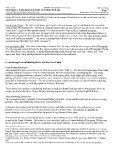
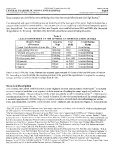
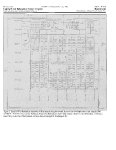
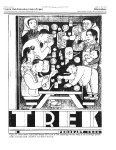
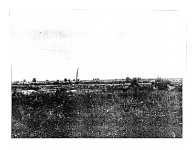
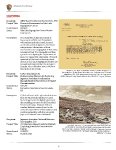
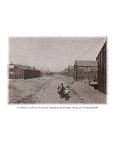
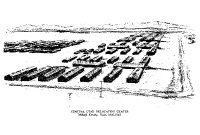
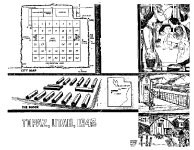
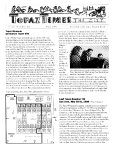
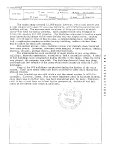
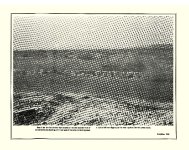
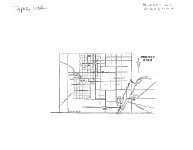
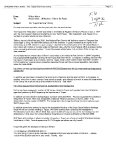
Show NPS Fonn 10-900 USDlINPS NRHP Registration Fonn (Rev. 8-86) CENTRAL UTAH RELOCATION CENTER (TOPAZ) United States Department of the Interior, National Park Service OMB No. 1024-0018 Page 25 National Register of Historic Places Registration Fonn Central Utah Relocation Center Site Selection In addition to the assembly centers such as Tanforan, more permanent relocation camps were established in locations that met specific criteria. The four major requirements outlined by officials were: a site with the possibility of extensive agricultural development and associated year-round employment; a location a "safe distance" from important installations such as power plants and water systems; the availability of federallyowned land and other acreage for purchase; a location near a railhead; and adequate water and electricity for the development. As later noted in Topaz's Trek magazine, the criteria pushed the government officials to examine "wilderness" type settings. 57 On 6 February 1942 the Salt Lake Tribune announced that the federal government was evaluating Utah as a site for "alien enemy camps." Western Millard County initially was examined but rejected due to a perceived lack of adequate water. The Millard County Chronicle later reported that federal agents had checked and mapped sites in the area of Delta early in 1942 without knowledge of the landowners. Millard County residents Homer and Nels Petersen felt the locale was well-suited for a camp and traveled to San Francisco to assure authorities that both acreage and water were available. The Petersens had acquired most of the water in the vicinity of Abraham, Utah, a small community located west ofthe town of Delta bordering the Sevier Desert, where a large undeveloped expanse of public and privately-held lands was available. Mostly unsuccessful attempts had been made at cultivating the area, "a bleak and windy plain," designated by such names as "Valle Solado" (Valley of Salt) and the "Big Alkali Flat.,,58 In April a government inspection team arrived in Delta to examine the proposed site. Officials found that the location met their needs; arranged to purchase almost twenty thousand shares of water in the Abraham, Delta, and Deseret Canal companies; and planned to combine federal, county, and private lands for a relocation camp. Millard County owned a substantial part of the acreage, which had reverted to it for failure to pay taxes. The site, officially selected in June 1942 and known as the Central Utah Relocation Center, included about 1,400 acres of federal land, approximately 8,840 acres of county land, and about 9,760 acres of private land. Local residents were informed that a relocation center, initially projected for ten thousand inmates, would be built northwest of Abraham and include an estimated six hundred buildings. Plans called for the entire camp to be fenced, with armed guards patrolling the perimeter. Government officials envisioned that following the war, the facility would become a rehabilitation site for soldiers who wished to farm and a scientific test facility for crops. The Millard County Chronicle observed, "Abraham has long been one of the smallest towns of the state, but by this increase it now takes its place as the fifth town in Utah for population.,,59 Attitudes Toward Japanese Americans in Utah Japanese Americans had been living in Utah for many years before the creation of the relocation camp; the first individuals settled in the state during the late nineteenth and early twentieth centuries. Among the pioneers were Mormon converts, miners, and railroad workers. The development of the sugar beet industry drew field laborers to Box Elder County in 1903, and a sugar beet processing plant that opened in Salt Lake County in 1916 also stimulated migration. Depressed agricultural prices in the 1920s resulted in Japanese American farmers switching from sugar beets to truck products and fruit-raising. Others moved to urban areas to establish S7 WRA, WRA, 20; Trek, vol. 1, no. 1(December 1942): 3. S8 Taylor, Jewel of the Desert, 108; Robert C. Anderton, "Central Utah Project, Topaz, Utah, 1942-45: A Study," 1969, Manuscript No. 217, on file at the University of Utah, Marriott Library, Special Collections, Salt Lake City, Utah; Arrington, Price of Prejudice, 21. . S9 Anderton, "Central Utah Project;" Arrington, Price of Prejudice, 37; WRA, WRA, 22; Edward L. Lyman and Linda K. Newell, History of Millard County (Salt Lake City, Utah: Utah State Historical Society, 1999); Millard County Chronic/e, 25 June 1942 and 2 July 1942. |