| OCR Text |
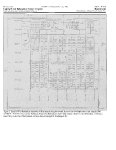
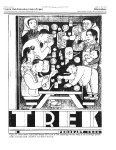
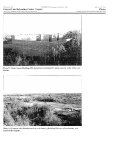
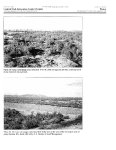
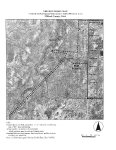
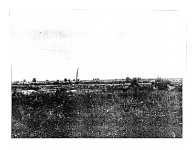
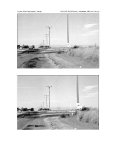
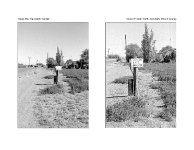
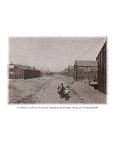
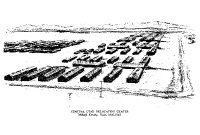
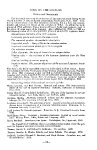
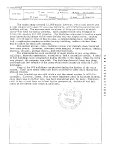
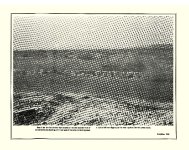
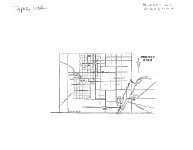
Show NPS Fonn 10·900 USDlINPS NRHP Registration Fonn (Rev. 8·86) CENTRAL UTAH RELOCATION CENTER (TOPAZ) United States Department of the Interior, National Park Service OMS No. 1024·0018 Page 5 National Register of Historic Places Registration Fonn Bonneville and is home to jackrabbits, coyotes, snakes, and scorpions. The June 1943 issue of Trek, the relocation center's literary magazine, concluded that "the general appearance is that of a vast wasteland.,,2 In his book The Price of Prejudice, historian Leonard Arrington painted a vivid picture of the camp's setting: Surrounded on all four sides by mountains, the barren valley in which it was located is 4,600 feet above sea level. The climate ranges from a boiling 106 degrees in summer to a frigid 30 degrees . below zero in winter. The rainfall averages between 7 and 8 inches per year. One characteristic of the area is the wind, which keeps up a seldom interrupted whirl of dust. Another is the nonabsorbent soil, which, after a rain, is a gummy muck, ideal as a breeding ground for mosquitoes. 3 The nominated property encompasses a total of 728.4 acres lying within Sections 19, 20, and 30 of Township 16 South, Range 8 West, Salt Lake Meridian. Section 20 contains 614 of the original 640 acres of the developed area of the Central Utah (Topaz) Relocation Center. To the west are 114.4 acres that encompass areas associated with the camp's trash dump and sewage system septic field. The Topaz Museum owns 614 acres of the historic built-up portion ofthe camp in Section 20. The Japanese American Citizens League (Salt Lake City Chapter) owns one acre of the site in the northwest part of Section 20. The Bureau of Land Management (BLM) administers 114.4 acres of the site west of the built-up portion of the camp in Sections 19 and 30, which contained the original septic field for the sewage system. Artifacts associated with the wartime use of the camp can be found throughout the property. Recent archaeological surveys and fieldwork performed for this nomination have confirmed the extent, richness, and variety of cultural resources present. Fieldwork and photography undertaken for this nomination documented representative and significant features of the site. Types of extant features are discussed below; photograph numbers refer to descriptions in the 4 photographic log at the end ofthis section. Site Features Roads. The original graded gravel surface roadways of the camp are clearly visible and maintain their historic alignments. All are drivable except for a few segments that are overgrown with greasewood or have been damaged by minor washouts. The road system is easily discernable on aerial photographs of the site and displays the grid pattern characteristic of a relocation camp (see Figure 20). The dark gray gravel used to surface the roads during World War II serves to differentiate them from the lighter alkaline soil of the site (photograph 3). Roads delineate each of the forty-two regular blocks in the evacuee housing area, as well as the functional areas in the northern section of Topaz. County roads, also important during the life ofthe camp, border each side of Section 20. Foundations. Virtually all of the concrete foundations of the Topaz buildings are still present. When the wooden buildings were demolished or sold after World War II, the frame superstructures were unbolted, leaving the underlying concrete foundations in place. The existing foundations are visible on recent aerial photographs of the site and the different foundation types are readily identifiable (see Figure 20). At ground level, it is somewhat more difficult to obtain an overview ofthe layout of foundations due to the tall vegetation that covers much of the 2 Arrington, The Price of Prejudice, 4; Topaz Times, 17 September 1942, 2; Taylor, Jewel of the Desert, 90; "Topaz," Trek, June 1943, 17. 3 Arrington, The Price of Prejudice, 22. 4 Representative features photographed for the nomination were selected based on the survey work performed by SWCA and on suggestions provided by Jane Beckwith, president of the Topaz Museum. Similar examples of foundations , paths, roads, and other landscape features are found throughout the site. |