| OCR Text |
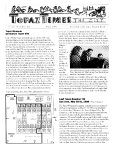
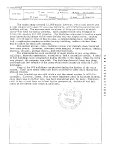
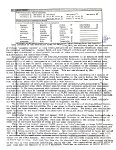
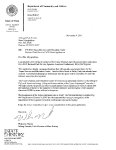
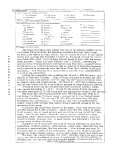
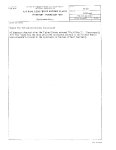
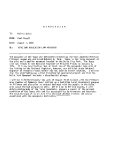
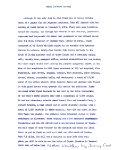
Show 6 a protecting power. Historical Significance of Topaz Relocation Center. Even the Nisei, resenting the implication that their loyalty was in doubt, felt that the question was unfair, and in Topaz, almost a fifth of all male residents answered in the negative. Agreeing that there was justice in the complaint against the wording, WRA induced the Army to change it to: Will you swear to abide by the laws of the United States and to take no action which would in any way interfere with the war effort of United States? This change was too late to affect the unfavorable impression which the original wording had produced, and many refused to answer. There were intense feelings on the issue and emotions were stirred to unprecedented levels.By the next September, there was a surprisingly large number. of repatriation and ~xpatriation requests. The total was 447. Only 36 of these actually left Topaz to board an exchange ship for Japan. At this time, the War Department announced that evacuee volunteers from all the centers would be accepted for a Japanese-American combat team. Because they were interned in a concentration camp, few volunteered---then, that is. Those who did volunteer at this time made a glorious record of achievement in spite of extremely high rate of casualties before the war ended. One other event that occurred during the Topaz registration campaign served to weaken the evacuee faith in WRA. In October 1942, the Western Defense Command had decreed that no noncitizen Japanese were to be allowed within a distance of one mile of the outside boundaries of the center. An inevitable result of this ruling was the fatal shooting on April 11,1943, of an elderly Issei resident (James Hatsuki Wakasa) by an MP sentry, who gave an explanation that Mr. Wakasa was attemtping to cross the inner boundary fence and failed to obey the challenge to halt. There was a general clamor for protection against soldiers with guns, a moving memorial service was held for the victim, and there were work stoppages that lasted for two weeks until the administration promised that no incident of this kind would ever occur again. At this time, children of Topaz civilian employees were taken by the Abraham bus to Millard County Hinckley High School. Fear was rampant in Pahvant Valley as well as within the Topaz Relocation Center itself. The principal consequence of the mass registration W8S" the segregation of the "loyal" from the "disloyal". "i,447 residents of Topaz were moved to Xule Lake center as "disloyals" in September and October of 1943. In exchange, 1,489 residents of Tule Lake center who had declared their loyalty to the United States were moved to Topaz. Some 385 of the Topaz 1,062 were American citizens. segregants were Japanese aliens and |