| OCR Text |
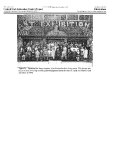
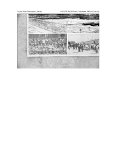
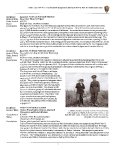
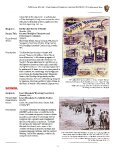
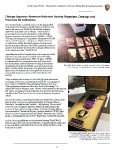
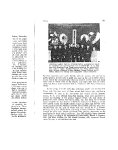
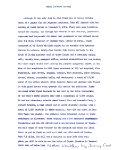
Show NPS Fonn 10-900 USDlfNPS NRHP Registration Fonn (Rev. 8-86) CENTRAL UTAH RELOCATION CENTER SITE (TOPAZ) United States Department of the Interior, National Park Service OMB No. 1024-0018 Page 40 National Register of Historic Places Registration Form down and do these sketches in an hOUL Without this, he would have died ... " Her father, who had studied at the California College of Arts and Crafts, produced "a series of drawings, one for each block in TORaz, illustrating a unique aspect of that block, accompanied by a philosophical poem/prayer for peace." 15 Others who lacked previous formal training expressed their creativity through arts and crafts with the encouragement of the school. Mine Okubo recalled that "everybody in camp displayed their talents. They made use of everything in camp. Rocks, pebbles, fruit wrapping, seeds, cardboard, fence, anything they could find," Tsuyako Kitashima remembered, "People created incredible objects from sagebrush roots, discarded orange and food crates, automobile springs, onion sacks, and shells." Many people collected the tiny shells found on the site, which they fashioned into floral jewelry. Since only sunflowers grew in the desert, paper flower-making was enjoyed widely. Haruko Obata taught traditional flower arranging using crepe paper flowers and items found in the landscape. The school held its first arts and crafts show shortly after the evacuees arrived, on October 16, 1942, an exhibition that included more than five hundred displays. Evacuees showed such items as wood vases and desk sets, stuffed animals and dolls, handmade clothing and hats, elaborate carvings, and jewelry made from a variety of materials. Leaders of the art school held the exhibit in the hope it would convince the administration to support and provide funds for their program. The last art exhibition was held in June 1945 (see Figure 29).11 Although the government outlawed the possession of cameras by Japanese Americans in the relocation centers, Masaharu Dave Tatsuno secretly filmed aspects of everyday life at Topaz during his three-year incarceration. The footage was later edited into a forty-eight minute film, "Topaz," which was placed on the National Film Registry of the Library of Congress in 1996, one of only two home movies to be so honored. Tatsuno (19132006) ran the Japanese department store founded by his father in San Francisco before the war and managed the cooperative store while at Topaz. With the assistance of the store's Caucasian supervisor, Walter Honderick, who was also a fan of home movies, Tatsuno had his camera smuggled into the camp and hid it in a baby shoe box. He purchased film while on buying trips for the store and had it processed outside Topaz. Tatsuno believed that one of the most important scenes he recorded was of his brother wearing his army uniform visiting his family in the relocation camp. Upon his death in February 2006 the New York Times commented that Tatsuno's home movies "offer a rare documentary portrait oflife in American internment camp during World War II .... ,,117 Libraries and Publications The library had been one ofthe most popular facilities at Tanforan, and the move to Utah did not diminish the residents' desire to read. The Topaz Public Library was considered the best in any of the relocation camps. Although it took some time to open the building due to delays in getting the roof tarred, stoves placed, and the interior walls sheet rocked, the library became operational on December 1, 1942. The initial core of the collection included more than five thousand books from the assembly centers and those donated by friends of evacuees, California schools, colleges, and libraries. People at Topaz also provided books and magazines for the library, and the collection reached more than seven thousand items. In addition, the Salt Lake County Library at Midvale supplied a changing group of books for residents to check out. In 1943, the college libraries at the University of Utah and University of California at Berkeley authorized interlibrary loan services for the Topaz Library. Demand for library services was so high that attendance reached about 450 persons per day and the facility remained open twelve hours daily. In addition to the main library in Recreation Building 16, there 115 Katayama quoted in Gesensway and Roseman, Beyond Words, 159. Topaz Times, October 17, 1942, 2; Millard County Chronicle, October 22, 1942; Gesensway and Roseman, Beyond Words, 22; Okubo, Citizen 13660, 169; Kitashima and Morimoto, Birth of an Activist, 53; Hill, Topaz Moon, 67 and 85. 117 New York Times, February 13 , 2006, A21; Erin Kimura, "Dave Tatsuno, Creator of "Topaz" Video, http://www.scu.edulSCU/Programs/Diversity/tatsuno (accessed November 3, 2005). 116 |