| OCR Text |
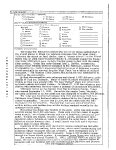
Show nesses were closed and their bank accounts "blocked." The remainoer, both citizens and aliens, \\'ere requircd to register and carry ioentification cards and to turn over to local police all "contraband"- cameras, radios, binoculars, and firearms. They were also "frozen" to within a five-mile radius of their homes and required to be in their homes between the hours of 8 p. m. and 6 a. m. In succeeding weeks, as Japan launched successful assaults against the Philippines, Thailand, and Singapore, the American public became increasingly suspicious of persons of Japanese ancestry in the United States. Indeed, despite a traditional belief in tolerance and fair play, Americans - particularly Californians - had never regarded Japanese immigrants with special favor. Some individuals had long encouraged the view that the Japanese could not be assimilated, that they represented a racially undesirable clement in American life, and that they imperiled the nation by their biological fertility. Of particular influence in the formulation of public attitudes were the widely publicized but completely unsubstantiated rumors of sabotage and fifth-column activity in Hawaii in connection with the Pearl Harbor attack. Reports of enemy submarine activity off the coast of California added to the mounting sense of panic. Fearful of an invasion of the continent, and increasingly conscious of the dangers of resident Japanese sabotage, citizens on the \Vest Coast demanded strong precautionary measures. That even the most conscientious Americans were vulnerable to the growing hysteria is illustrated by a column written from San Francisco by Walter Lippmann: . . . the Pacific Coast is in imminent danger of a combined attack from within and from without .... It is [true] ... that since the outbreak of the Japanese war there has been no important sabotage on the Pacific coast. From what we know about the fifth-column in Europe, tlus is not, as some have liked to tlunk, a sign that there is nothing to be feared. It is a sign that the blow is well organized and that it is held back until it can be struck with maximum effect. . . . I am sure I understand fully and appreciate thoroughly the unwillingness of Washington to adopt a policy of mass evacuation and interment [sicl] of all those who are technically enemy aliens. But I submit that \Vashington is not defining the problem on the Pacific coast correctly.... The Pacific coast is officially a combat zone: some part of it may at any moment be a battlefield. Nobody's constitutional rights include the right to reside and do business on a battlefield. And nobody ought to be on a battlefield who has no good reason for being there.' On the day after this column appeared seven members of Congress from the Pacific Coast states addressed a letter to President Roosevelt recommending the "immediate evacuation of all persons of Japanese lineage" and other "dangerous" persons from California, Oregon, 'Washington, and Alaska. At the same time, Lieutenant General John L. --l-'-'Washinglon {ails 10 cope with westorn fifth column," Salt Lake Tribune, February 20, 1942. -4- |