| OCR Text |
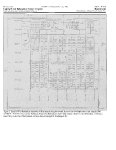
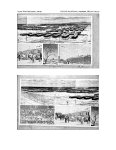
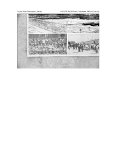
Show NPS Form 10-900 USDIINPS NRHP Registration Form (Rev. 8-86) CENTRAL UTAH RELOCATION CENTER SITE (TOPAZ) United States Department of the Interior, National Park Service OMB No. 1024-0018 Page 44 National Register of Historic Places Registration Form The Topaz Buddhist Church held weekly services, which were led by one of six reverends and Bishop Ryotai Matsukage. The church kept in contact with churches located at the other nine internment camps, and also those in the "free zone" (communities outside of the camps), by disseminating notices and publications for church use. 128 In March 1943, a two-day Buddhist conference was held, and a four-day Hana-Matsuri to celebrate the birth of Buddha complete with the distribution of artificial cherry blossoms, was planned for the following month. The Topaz Buddhist Church became the headquarters for the Buddhist Mission of North America (NABM), the largest religious institution for Japanese Americans prior to World War II. The Buddhist Church remained a strong institution throughout the war. Sixty-eight percent of Japanese American internees were Buddhist. 129 In 1944, Buddhist ministers and lay representatives met at Topaz to discuss the future of the NABM. These meetings led to a reorganization of the NABM institution and several significant changes. The NABM changed its name to the Buddhist Churches of America and leadership roles, originally held predominately by the Issei generation, transferred to the Nisei generation. Under this transformed institution, new Nisei ministers conducted services in English instead of Japanese, further closing the gap between religious and generational differences. Churches played a key role in maintaining the spiritual and social life of Japanese Americans in camp. An Inter-faith Ministerial Association coordinated religious activities in Topaz. Tsuyako Kitashima found that religious services attracted standing room only crowds: "It seemed we were all in need of spiritual guidance and comfort." 130 Recreation The WRA encouraged "a broad and varied program of recreational and other leisure-time activities." Traditional Japanese sports and pastimes were encouraged if they had no political components. Sports were very important to the evacuees even though they had to buy their own equipment to play. At Topaz, the program initially was hampered by the fact that most of the recreation halls were needed for more pressing purposes, such as schools, stores and offices. Open acreage within the camp was set aside for recreational pursuits and sports opportunities included football, basketball, tennis, volleyball, sumo wrestling, and the favorite - baseball (See Figure 32). Each block fielded its own baseball and basketball teams for competition within the camp. Touch football games occurred in open areas. An ice skating pond was built on the south side of camp providing some sport during cold days. However, the ice quickly melted and skating was never a popular activity. In California many residents had belonged to golf clubs and evacuees created a nine-hole golf course and a related Topaz Golf Club in 1943. 131 Other Aspects of Camp Life Events and Celebrations Despite the abnormal setting, births, deaths, weddings, and the common events of life continued at Topaz, as did special celebrations. The first birth occurred on 22 September 1942. The first wedding was held in November 1942. The camp included land allotted for a cemetery which was never used. Persons who died at 128 Eiko Irene Masuyama, comp. , Memories: The Buddhist Church Experience in the Camps, 1942-1945 (Los Angeles, CA, 2003), 108. 129 Tetsuden Kashima, Buddhism in America: The Social Organization of an Ethnic Religious Institution (Westport, CT: Greenwood Press, 1977), 53 . 130 Taylor, Jewel of the Desert, 155, 157; Topaz Times , March 6, 1943, 7, April 6, 1943, 4, April 19, 1944, 1, April 22, 1944, 4 ; Millard County Chronicle, October 22, 1942; WRA, Welcome to Topaz, 14; Kitashima and Morimoto, Birth of an Activist, 53. 131 WRA, The Relocation Program, 12; Okubo, Citizen 13660,170; WRA, Welcome to Topaz, 19; Kawaguchi, interview; Trek I, no . I (December 1942): 10; Okubo, Citizen 13660, 158; Topaz Times, October 17, 1942, 5, March 13, 1943 , 5. |