| OCR Text |
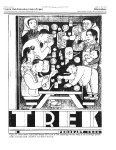
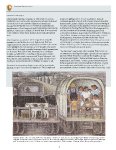
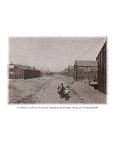
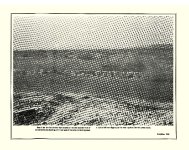
Show NPS Form 10·900 USDIINPS NRHP Registration Form (Rev. 8·86) OMB No. 1024·0018 CENTRAL UTAH RELOCATION CENTER SITE (TOPAZ) United States Department of the Interior, National Park Service Page 29 National Register of Historic Places Registration Form taken mainly from the Bay area, in and around San Francisco, and represent a very high type of Japanese." The director indicated that the evacuees would work on farming and defense projects, such as making camouflage nets and brooms to help the war effort. 67 On September 8 a contingent of ninety-seven military police arrived at Topaz. On September 11, a volunteer group of214 Japanese Americans from Tanforan came to assist with weatherproofing, transportation, setting up kitchens, preparing the hospital, and other activities to ready the camp for the remainder of the evacuees. Trek, the camp magazine, later noted, " .. . the arrival of the advance contingent of volunteer evacuee workers from Tanforan Assembly Center signalized the birth of Topaz as a living community." The volunteers included such workers as doctors and nurses, clerks, truck drivers, and laborers. George Gentoku Shimamoto supervised the advance party who assisted with completion ofthe project. At the first mass meeting between the evacuees and the administration, Rev. Taro Goto, a Methodist minister and a leader of the advance group, dedicated the camp "to the glory of almighty God and to the uplifting of his kingdom. ,,68 Trek later contained an article by Taro Katayama that described the early days of the camp: Asked what the infant city was like, those first residents might have, with some justice, summed it up with one word-dust. For dust was the principal, the most ubiquitous, ingredient of community existence at the beginning. It pervaded and accompanied every activity from sleeping and eating and breathing on through all the multitude of other pursuits necessary to maintain and prepare the city for those yet to come. It lay on every exposed surface inside the buildings and out and it rose in clouds underfoot and overhead on every bit of exposed ground wherever construction work had loosened the hold of greasewood roots on the talcum-fine alkali earth. It obscured almost every other consideration of communal life just as, when a wind rose, it almost obscured the physical fact of the city itself.69 Evacuees at the assembly centers such as Tanforan were aware that they would be moved further inland from those locations. During the summer of 1942, anxieties had grown as rumors spread about where they would be sent. Sandra C. Taylor found that, due to its desert climate and temperatures which could range from 30 degrees below zero in the winter to 106 degrees in the summer, Topaz ranked rather low in desirability among the evacuees.70 During the period before they learned their final assignment, some people were allowed one last visit to their former homes to check on their businesses or belongings. Once again officials did not announce where the Japanese Americans would be relocated, but after the first group left word spread about their destination. 7 The two-night trip to the Central Utah Relocation Center was accomplished in groups of about five hundred, aboard old trains with features such as gas lamps and velvet upholstery. The swaying cars resulted in many cases of motion sickness exacerbated by the fact that windows remained closed with shades drawn from dusk to dawn. One stop was made as the trains crossed the desert in Nevada to allow the travelers to exercise their legs and breathe fresh air, but a barbed wire enclosure and armed guards limited the movements of the travelers. When they crossed near Salt Lake City at night, the evacuees were allowed to look out the windows at "the 67 There is no evidence that defense products were produced at the camp. Millard County Chronicle, September 10, 1942. 68 Tanforan Totalizer, September 12, 1942; WRA, Welcome to Topaz, 4; Trek 1, no. 1 (December 1942): 3; Millard County Chronicle, September 3, 1942; Taylor, Jewel of the Desert, 92 ; Topaz Times, September 17, 1942, 1. 69 Trek 1, no . 1 (December 1942): 3. 70 On July 27, 1943, the thermometer rose to 105 degrees at Topaz. 71 Taylor, Jewel of the Desert, 86. |