| OCR Text |
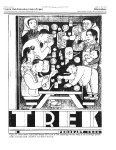
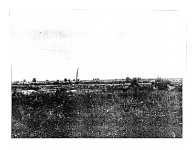
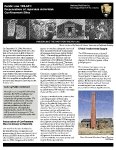
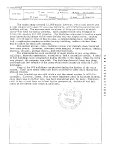
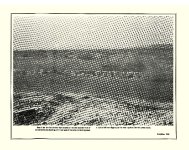
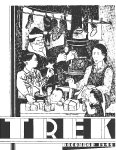
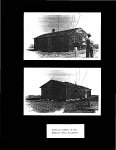
Show NPS Form 10-900 USDIfNPS NRHP Registration Form (Rev. 8-86) OMB No. 1024-0018 CENTRAL UTAH RELOCATION CENTER SITE (TOPAZ) United States Department of the Interior, National Park Service Page 53 National Register of Historic Places Registration Form ... you look back on it now, and all you hoped for was that you can get back, you see, and reestablish life again. And then, you know, I felt sorry for so many people, they had nothing to go back to. You see? They lost their job or whatever it was. It was a very bleak time. And so the people in camp, the uppermost worry was what's gonna happen to them after the war.... 166 In February 1945, an all-center conference of evacuees held in Salt Lake City discussed issues regarding closure of the camps and the process of return. Dillon S. Myer subsequently paid a two-day visit to Topaz, examined conditions, answered questions, and spoke to gathered residents about WRA policies. Sandra C. Taylor reported that the camp administration began providing "little squeezes" designed to encourage people to leave, such as charging for transportation into Delta to go shopping. She found March 1945, "was the beginning of the diaspora." 167 As the momentum to leave increased, facilities and programs were condensed. Dining halls began closing in May, and by that month Topaz was one-third its original size due to leasing of the camp's farmlands. Vocational classes closed at the end of May, and on June 1, 1945, Topaz schools ceased operation. Adult classes ended on June 30. In mid-July, Topaz residents learned that their camp would close on November 1, 1945 . Farm animals were either sold or slaughtered. On August 15, the first train transporting Topaz residents to the West Coast left Delta. The last issue of the Topaz Times was distributed on August 31, when there were 3,319 persons still in the camp. On October 1, the Community Council held a farewell banquet in Delta. The last train for the West Coast began its journey on October 26, 1945. 168 Residents of Topaz responded to the closing down of camp as they had to earlier events, with acceptance, not violence. Sandra C. Taylor analyzed, " ... its ending was in keeping with its previous history." The last group of evacuees to depart were mostly Hawaiians who were waiting for transportation, and the last community event was a Halloween and closing party attended by administrators and residents. Topaz closed as scheduled on October 31 , 1945. 169 Disposal of Camp Assets and Topaz in the Postwar Period A program to dispose of the assets of the ten relocation camps was undertaken and all camp property was declared surplus. The Topaz Relocation Center was turned over to the War Assets Administration (WAA) on February 9, 1946. The buildings, appraised at $4.5 million, were taken to educational facilities or sold at minimal prices; some were used on local farms as outbuildings or moved into Delta and remodeled for housing. The auditorium was sent to Southern Utah State College where it was used for forty years. While some supplies and equipment were sold to schools and other entities, Jane Beckwith reports that those at the scene recall that office equipment was simply buried in the desert. The buildings were removed from the site by 1946 (although the brick Boiler Plant smokestack was reportedly still present in the 1950s), the land went into private ownership, and over the next several decades, greasewood reclaimed the camp. Following abandonment of the site, local residents salvaged cast iron and other materials from what remained. As Taro Katayama had foreseen in 1942, "A Topaz emptied of its human component would soon be reclaimed by the barrenness from which it is . b . . Just eglnnmg to emerge. ,,170 166 Taylor, Jewel of the Desert, 188; Dave Tatsuno, San Jose, California, interview by Aggie Idemoto, January 20, 2005, Densho Digital Archive, http://archive.densho.org (accessed December 12,2005). 167 Topaz Times, February 21, 1945, I; February 24, 1945, I; March 3, 1945; Taylor, Jewel of the Desert, 211. 168 Topaz Times, April 17, 1945, 2; May 4, 1945, I; May II, 1945, I; August 31, 1945, I; Arrington, Price of Prejudice, 54 . 169 Taylor, Jewel of the Desert, 220-221. 170 Ibid., 221; Arrington, Price of Prejudice, 55; Beckwith, interview, October 6 and 7, 2005; Taro Katayama, "State of the City," Trek I, no. I (December 1942): II . |