| OCR Text |
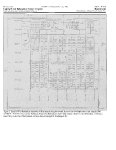
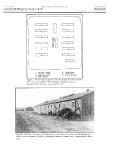
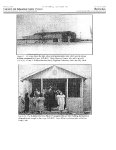
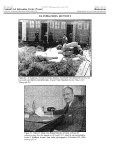
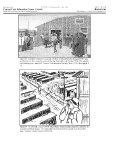
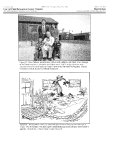
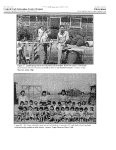
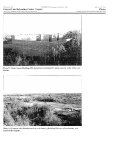
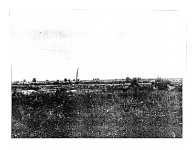
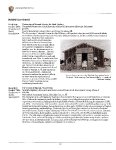
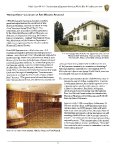
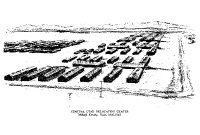
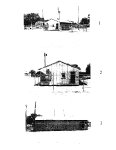
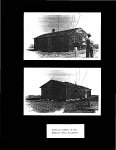
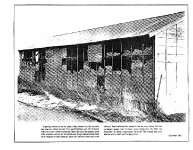
Show NPS Fonn 10·900 USDIINPS NRHP Registration Fonn (Rev. 8-86) CENTRAL UTAH RELOCATION CENTER (TOPAZ) United States Department of the Interior, National Park Service OMB No. 1024·0018 Page 13 National Register of Historic Places Registr8tion Fonn had wood floors, forced air heating, and bath and toilet facilities inside living and working quarters, rather than in 'a separate building. Administration Area. On the west side of Tamarisk Street, southwest of the main gate, was the Administration Area, where the civilian WRA employees and their evacuee assistants worked. This portion of the camp contained the two principal administration buildings (223 and 224), which were later joined by a corridor (223-A) to form a . V-shaped complex. A still extant low stone wall lay to the east adjacent to a parking area along Tamarisk Street. To the south, on the west side of Tamarisk, were the post office (226), the fire station (227; see Figure 12), and the engineer's office (228). West of the fire station and engineer's office were the finance office (130), the placement building (131), and the agriculture office (132). WRA Staff Housing Area. Originally, WRA stafflived in Blocks 1 and 2 of the residential area?6 By January 1943, staff housing was under construction on both sides of Cactus Road between the administration buildings and the Warehouse Area. Included were four-unit staff apartments (201·:2.13) and four staff dormitories (215, 217, 219, and 221). The quarters occupied by the project director' s family featured a shed roof with wide front overhang, drop siding, and corner windows with awnings (See Figure 13). Support buildings for the housing area were also' located here: the recreation hall (200), a laundry (214), the officers ' mess hall (220), a warehouse (216), and the post exchange and beauty salon (222).27 Hospital Area East of the camp's main gate was the Hospital Area, between Obsidian and Zircon avenues and Ponderosa and Lotus roads (See Figure 14). The sprawling fifteen-building complex was linked by covered and/or enclosed walkways and included the following: an administration building, doctors' quarters, nurses' quarters, a pediatric ward, three wards for adults, a surgery, an obstetrical ward, an isolation ward, an outpatients' building, a mess hall, . two warehouses, and a morgue and disinfecting building. Clad in white asbestos shingles, the hospital contrasted with the black tarpaper exteriors of most of the other evacuee facilities. The hospital buildings were of more substantial construction and had central heating supplied by steam from a boiler plant. The buildings had wood floors and interior walls were finished with wallboard. The boiler plant (301) and laundry building (302) were located north of the hospital on the north side of Obsidian Avenue. The coal-fired boiler plant featured two 250hp Sterling boilers and a 50-foot-long, 52-ton capacity coal bunker that was fed by a belt elevator. The 150-foot brick smokestack of the boiler plant was the tallest structure in the area and served as a visual landmark at the camp.28 Warehouse and Industrial Area West of the Administration Area, near the northwest comer of the camp, was the Warehouse Area, which occupied the western two-thirds of the block bounded by Alexandria and Crystal avenues, Greasewood Way, and Cactus Road. Twenty-one rectangular warehouses (101-121) were located here. Building 109 was a refrigerated warehouse with refrigeration and ice-making equipment. The warehouses had shallow gambrel roofs, walls sheathed with 1" lumber and clad with roll roofing, and concrete slab floors. Immediately south of the warehouse area lay an "industrial area" bounded by Crystal and Malachite avenues, Greasewood Way, and Elm Street. This section was largely undeveloped, with the exception ofa root cellar (136) near the northwest corner. Construction of the root cellar began in December 1943. The structure extended 3.5 26 At least one barracks in Block 2 was used for administrative functions. In December 1943, the Placement and Transactions units moved into Barracks 11. 27 Topaz Times, 3 October 1942,2,14 December 1943,1, and 21 January 1943,1. 28 Topaz Times, 21 January 1943,1 , and 2 July 1943, 8. |