| OCR Text |
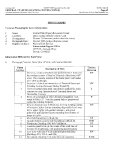
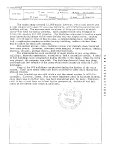
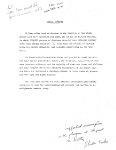
Show NPS Fonn 10-900 USDlINPS NRHP Registration Fonn (Rev. 8-86) CENTRAL UTAH RELOCATION CENTER (TOPAZ) United States Department of the Interior, National Park Service OMB No. 1024-0018 Page 49 National Register of Historic Places Registration Fonn The WRA' s history of its activities published in 1946 noted, With very few exceptions, although with varying degrees of intensity, nearly all employes [sic] of the agency in positions of responsibility concluded fairly early in the program that the.relocation centers were bad for the evacuated people and bad for the future health of American democracy, and agreed that they should be abolished at the earliest practical date. This conviction eventually became so widespread and so strong that practically all other considerations were subordinated to 't 155 I . Resettlement of the evacuees to areas outside the West Coast was a priority of the administration from the day Topaz opened. People who could find outside employment or pursue their education and were not considered a security risk were encouraged to leave. In September 1942 the WRA introduced rules governing seasonal or permanent leave for evacuees. When Dillon S, Myer visited the camp on 4 October 1942, he stated, "Our first concern is not the post~war period but the problem of relocating Topaz residents outside the center before the war is over." Myer warned that there was no guarantee that people could remain in camp after the war. He encouraged residents to " . . . scatter out to every community in the U.S. so we can learn to understand you." In December 1942 the Topaz Times noted that "the WRA projects are faced more than ever with the paradoxical situation of building and depleting a community at the same time.,,156 A pamphlet entitled Welcome to Topaz, published in 1943, was given to evacuees to provide them with general information about the camp and a directory of services available. Project Director Ernst included a letter highlighting the relocation program, noting, "It is important also that persons who come to live at Topaz are welcome to stay but they're equally welcome to go. It is the purpose of the War Relocation Authority to depopulate the relocation centers as quickly as opportunities for relocation can be found for residents." Emphasizing the WRA mission to help as many as possible relocate, Topaz's director noted, "The gate of Topaz is open to all residents with the desire and hope of assimilating themselves into the normal American communities." Relocation was touted as a way the evacuees could contribute to the war effort by finding work . .h h 157 In areas WIt manpower s ortages. A major factor in the relocation effort was the formation of the National Japanese Student Relocation Council in May 1942 in Philadelphia. The purpose of the organization was to help Nisei students leave camp to attend college and avoid interruption of their education. Students from Topaz began relocating during the first month the camp was open, with the first group leaving on 7 October 1942. Brigham Young University and the University of Utah were among the most active institutions of higher education to enroll Japanese-American students who relocated during the war. In August 1944 the War Department lifted all restrictions on colleges for Nisei enrollment. 158 Resettlement gained momentum in the spring of 1943, when Director Ernst was authorized to issue relocation permits irregardless of whether the persons involved had secured specific jobs. During 1943-1944 almost two thousand evacuees left Topaz on permanent leave. Chicago was the most popular city for relocation from Topaz during this period. A number of people also moved to Salt Lake City and other locations in Utah to pursue yearround employment. The rate of relocation subsequently declined, as most of the younger, skilled, and ableWRA, WRA, 183. 156 Topaz Times, 7 October 1942, 1; 5 December 1942, 2. 157 WRA, The Relocation Program, 1; WRA, Welcome to Topaz, 2 and 24-25 . 158 R. Todd Welker, "Utah Schools and the Japanese American Student Relocation Program," Utah Historical Quarterly vol. 70, no. 1 (Winter 2002): 1-18; Topaz Times, 10 October 1942,4 and 27 October 1942; All Aboard, Spring 1944, 5; Niiya, Encyclopedia of Japanese American History, 70 . 155 |