| OCR Text |
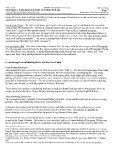
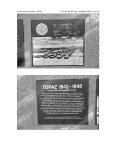
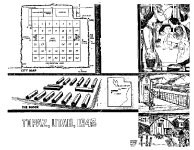
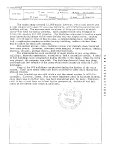
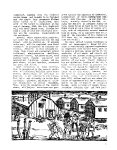
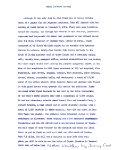
Show The voting priyikgc was givcn to all residcnts 18 and over, and the hol(ling of elective office was restricted to those who were American citizens over 21. The latter provision was incorporated because of the feeling that the citizenship of the Nisei was valueless unless it gave them this recognition, and also because the decisions taken by the Nisei would almost certainly be more in keeping with American institutions and practices. However, the Issei were eligible for appointive positions. Early in 1943, when many of the capable and reliable Nisei leaders began to leave the centers for relocation, the policy on community government was broadened to permit Issei membership on the Council. This change lessened the cleavage between the Issei and the Nisei and introduced a leaven of maturity and seasoned judgment into the Council. It also tended to place responsibility in the hands of many who were critical of the basic resettlement aims of WRA and less sensitive to the exacting demamls of American publie opinion. Despite the fact that the evacu{'e pcople were living in a highlynbnonnal, highly-charged atmosphere, there was less crime than in ordinary American communities of the same size." According to one survey made in 1944, the law was brok~n three times as frequently in ordinary cities as' in relocation centers. In the Utah center, for example, the worst crimes in three years of existence, with an average of almost 8,000 people.. were 2. cases of aggravated assault, 2 of grand larceny, and 1 of destroying government property. There were no murders or rapes, only 6 cases of drunkenness, 10 of gambling, a number of cases of burglary and minor theft, and 272 parking violations. U AGRICULTURE was the original objective of \VRA that each center be as nearly I tself-sufficient as possible, that a surplus of certain products he produced to supply other centcrs whcre the production of such items was insufficient, and that, where possible, additional supplies of food be produced for the Food-far-Freedom program. This goal of seIfsufficiency was steadily revised downward as the emphasis of WRA's program shifted from detention to relocation. -..-utah·s Iuslice James H. Wolfe. of the State Supreme Court. on the occll!lon of Inducting newry-c1t'Cted coundlmm nt Topa7.. remarked : "It i. almost unbelievnble that a ' whole peopl .. could b" uprool .. d from their hom ..... from thcir )'\lsi",'ss!'!. SUerN intrrml'tion to tbeir ramlly lir", come to nn t'nlirrly stronge plnee, In a I'la('e or isolotion Rnd mAny dis('omforts, and yet for a pt'riod of ov(~r two yC'nn hnve no ~~riou~ o'lt"r~:\k of (U,order. It speaks wC'll for your restraint, your path-nee. yonr CO\UA~C, your dtizp.nshit). Yon have kept alive democratic prineipl,.,. among yourselve.... SaIl Lake TriIJtl"f', Mnrch 14. 1945. t. The chier or the Internal security sec lion did report one int<'1'e.ting difficulty: It took a long time to get ;f0lice palrol cars rrpain'" quickly ill the molor pool. Apl>nrcnUy. mechllDic~ u·8.'iotlt"d thAt . thf'" patrul car was in the motor pool. oll1("r ("nrs nnd I1rivt'rs w('re safe from traffic tkkels. RE"ftOrt! indicntf' sf?vf"ral Instam':M in whirh C'nl~ wt"rt' taken to the motor pool with minor r("pairs and 1uold on one excusc or other for severnl weeks or months. -27- |