| OCR Text |
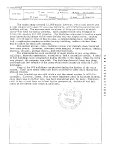
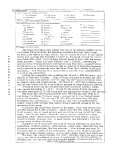
Show der heavy guard; on the other hand, public opinion and the military would not p~rmit it to open the gates without strict supervision and control of the evacuees in its charge. The latter point of view was underscored by the governing officials of the Western States at an exploratory conference held by WRA on April 7, 1942, in Salt Lake City. TIle WRA director expressed to the conference his deep concern about the civil liberties of the evacuees and the problem of making effective use of the manpower they represented, and then outlined WRA's plans for the establishment of hundreds of small work camps over the country, with evacuee participation in local and national programs of public works and agricultural and industrial production. The vast majority of state officials, however, insisted on rigorous confinement in some kind of concentration camp, with workers farmed out, if at all, under armed guards. Control over evacuees, they felt, should be on the same basis as that of Japanese citizens and aliens still remaining on the Coast. Almost unanimously, they demanded complete assurance that the internees would be removed from their states at the end of the war.' In the meantime, however, other pressures were forcing a reappraisal. There was considerable support for a program which would allow Nisei students at coastal universities to transfer to inland colleges without interruption of their schooling; and, with foreign sources of sugar cut off and a shortage of rural manpower at home, sugar beet companies pressed for the use of the highly-skilled Japanese labor. Remembering the unhappy experience of some of the voluntary evacuees, \VCCA and WRA bravely softened the absolute prohibition of movement from the assembly centers by permitting the relocation of a limited number of students and by granting permission to sugar companies to recruit evacuee labor. About 75 Nisei students were transferred in the spring of 1942 from California universities to universities in the interior. Even this was not simple to arrange; many colleges and universities were unwilling to accept Nisei evacuees who wanted to enroll. A minute from the meeting of the Board of Trustees in ~Iarch 1942 indicates that Utah State Agricultural College was one of those that turned down such applications. With one of the largest training centers in \Vestern America, giving elementary and advanced classes in radio technology to a • In ~far('h 1943 the Utah Legislature passed hy overwhelming majority a bill barri~g aliens inelisihle for United States citizenship (e.g .• Japanese) from purchasing or leasing real property in the state. Designed to prevent Topaz ,'vaClW(" from competing for Utah farm lands and becoming permanent residents, the bill was vetoed by GO"ernor Maw on the grounds that it wOllld prevent such other aliens as Chinese and Filipinos from acquiring land in the state, and would also d£'privc Utah farmers of the help of the alien evacuees at Topaz. The pressure to veto the hill, it was snid, came from representatives of sUJ!ar companit.."S. canning factories, poultry producers. and other processors in the state who had I.. amed that national authorities wonld rduse to allow alien )apan(s~ to work outside the center if the Act be<:ame law. Lat~r in the same month a milder law wa. passed and si!(ned which prohibited lapanese from cwning or making long-term leases of lands in Utah, but specifically permItted farmers to employ them for a cash fee or share of the ('rop. or to leas£' land to them for a period of one year. The Act was "'pealed in 1947 without B dissenting vote. -17- |