| OCR Text |
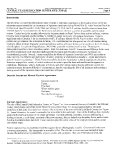
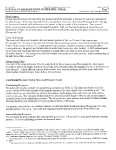
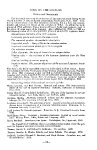
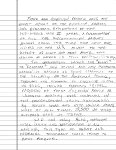
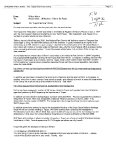
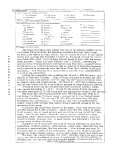
Show National Park Service JAPANESE AMERICAN CONFINEMENT SITES GRANT PROGRAM QUESTIONNAIRE-SUMMARY OF PU BLI C COM MENTS The 2013 Annual Report for the Japanese American Confinement Sites Grant Program included a questionnaire that invited comments regarding the progress of the grant program, which was then at its five-year mark. The questionnaire was included as an insert in the 2013 Annual Report, and mailed in December 2013 to over 7,200 individuals and organizations. Fifty-one people returned their questionnaires to NPS by the March 7, 2014 deadline. Responses to Questionnaire Thirty-two people responded to Question 1. Ofthose 32 people, 31 (97%) said that the funded projects met the intent of the legislation. The one person who replied "no" stated that the "NPS has made an honest effort," but noted that the program has been constrained by the budgetary process, adding that although the 2006 enabling legislation authorized $38 million, only $12.4 million had been appropriated by 2013. Nisei and even Sansei "are rapidly dying off," the person wrote, adding that, "We need to better and more quickly preserve their knowledge, experiences and general history." We are grateful that people took time to fill out the questionnaire, and appreciate the informative and constructive responses. Overall, the majority of respondents believe that the projects that have been funded through the Japanese American Confinement Sites Grant Program have met the intent of the legislation, and that the criteria for evaluating projects is effective. In addition, the majority of comments reflected continued support for the Japanese American Confinement Sites Grant Program, and appreciation for the work that has been accomplished by the grantees. As one respondent noted, "Our history is being preserved in a way I never dreamed could happen!" Another said, "I'm grateful that funds are available to store, catalog and share this part of U.S. history, for after all, what happened to the 120,000 Japanese Americans is truly an American story. We just can't let it happen again." Many respondents also expressed appreciation to the NPS for its administration of the program, with encouragement to "keep up the good work." Several people also noted that they found the annual newsletter informative. In addition, some respondents offered their thoughts on the types of projects that they supported or would like to see funded in the future. A number of people also gave recommendations as to how the NPS could improve the impact and effectiveness of the program, particularly requests for more information on completed projects to be posted on the NPS website, and for more use of social media, such as Facebook and Twitter. Twenty-two people directly responded "yes" or "no" to Question 2. Of those 22 people, 19 (86%) said that the program criteria should not be changed. The remaining 3 (14%,) gave a qualified "yes" response, with 2 providing specific recommendations as to how the project criteria should be changed - to focus future funding on the training of docents, and to encourage projects on the WRA personnel that lived and worked in the camps. In response to Question 2, the NPS received additional comments that expressed support for specific types of projects. These include: The NPS asked four questions in the questionnaire: 1) 2) 3) 4) Do you believe that the funded projects have met the intent of the legislation? If not, please explain. Do you believe that the project proposal criteria should be changed in any way to better meet the intent of Public Law 109-441? If so, how? Is there anything that you believe should be done to help improve the impact and effectiveness of the grant program? Do you have any other suggestions or comments? 30 • Nine comments supported projects to document and interpret lesser known and more diverse sites and stories of incarceration. • Six comments expressed the need for education projects. Three of those comments stressed student education, with one person noting the importance of educating "the public schools on the U.S. Constitution and how it failed during World War II." The other three comments underscored the importance of educating the general public, with one person adding "so that as citizens we can both appreciate the safeguards we have but also understand that these safeguards are only as effective as we are vigilant and watchful." |