| OCR Text |
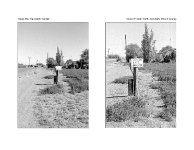
Show NPS Form 10-900 USDIINPS NRHP Registration Form (Rev. 8-86) OMB No. 1024-0018 CENTRAL UTAH RELOCATION CENTER SITE (TOPAZ) Page 37 United States Department of the Interior, National Park Service National Register of Historic Places Registration Form set up anywhere and any way. Makeshift screens were fashioned out of precious cardboard boxes, cartons, and scraps of lumber to protect the plants from whipping dust storms." A fifteen-acre community garden was also established, In the evenings residents lined up for "bucket brigades" to carry water between the laundries and the gardens. Yoshiko Uchida found that, in the end, these gardens were not entirely successful: "Our desert remained a desert, and not even the industrious Japanese Americans could transform it into anything else.,,102 One element of the landscape did not beautify the setting but reinforced the fact that the Japanese Americans were prisoners of the camp. In October 1942 evacuees were assigned to build a four-strand barbed wire fence around the developed area, and watch towers were erected in notched out areas on the outside of the enclosure. The Nikkei recognized the irony of having to fence themselves in, but felt they had no other choice. When evacuees questioned visiting WRA director Dillon Myer about the need for the fence, he replied that the army was free to do whatever it felt was necessary for the evacuees' protection. On November 11, 1942, a fence around the entire project area was completed, and the boundaries of the project were marked with red warning signs. Director Ernst warned, "Under no circumstances should anybody ever attempt to leave or to enter the Center by crawling through the fence,,,103 Health and Hospital Facilities The close living quarters, harsh climate, and stress related to camp life and the pressure to relocate, affected the health of most, if not all, evacuees. Yoshiko Uchida wrote, "None of us felt well during our incarceration in Topaz. We all caught frequent colds during the harsh winter months and had frequent stomach upsets." Adjusting to the strongly alkaline water and the dining hall food, many residents suffered from what was referred to as the "Topaz trots." The WRA found that Central Utah and the Jerome camp in Arkansas were the only centers which experienced epidemics. The Topaz Times reported a "widespread attack of intestinal flu" in late September 1942 and an epidemic of grippe and a case of polio in May 1943. Influenza infected 1,400 people in December 1943 and 1,100 during January 1944. Topaz doctor M. A. Harada described his own diminished health at Topaz, which included "insomnia, anorexia, and a constant feeling of fatigue." Sandra C. Taylor observed, "Topaz seemed to have a lot of illness, for many people reacted to the strains in community life by becoming physically or even mentally ill.,,104 Due to its isolated location, it was necessary to establish a complete medical facility at Topaz, A nurse was assigned to each residential block and residents were instructed to consult her first when health care was needed. If the case required skills beyond those of the block nurse, the patient was referred to the medical, dental, or eye clinic. The hospital unit consisted of medical wards, an out-patient department, a surgery, a public health department, warehouses, staff quarters, a dining room, and a laundry, The chief medical officer of the camp was a WRA employee, although much of the remaining staff consisted of evacuees. lOS The hospital was dedicated on October 18, 1942, when one wing was functional but the rest of the facility was unfinished. Although completion of the hospital facilities was a priority, certain wings ofthe main building did not open until a central heating system was operating and work continued on the associated boiler house and laundry into 1943. 106 102 Okubo, Citizen 13660, 102; Taylor, Jewel a/the Desert, 96; Uchida, Desert Exile, 125. 103 All Abaard(Spring 1944): 5; Okubo, Citizen 13660,155; Uchida, Desert Exile, 118; Topaz Times, November 10,1942, l. 104 Uchida, Desert Exile, 114; WRA, WRA, 105; Topaz Times, September 26, 1942, May 6, 1943, 1, June 12, 1943,3, December 14, 1943, I; Taylor, Jewel o/the Desert, 97, Ill , and 178. 105 Jane Beckwith states that two African-American nurses worked at Topaz. 106 WRA, Welcome to Topaz, 7 and 19; Topaz Times, October 24, 1942,5; Millard County Chronicle, October 22, 1942; All Aboard (Spring 1944): 5; Trek 1, no . 1 (December 1942): 6. |