| OCR Text |
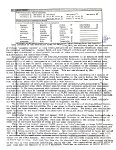
Show labo~ to the higher professional and technical oecupations. About 70 per cent of all those employed are males. Of the 3679 workers, tha largest numb~r, 1124, are in the d1ning halls, and the smallest number, 5, in the Projeet Attorneyts oftioe, By wage classifioatlon, somel),lO falJ. . wHhln the $19 per month or~~fij~s16it·~1 ·1\;ina ' tl::lcbzlical group, while the ' rest are in the $16 category, only one person being listed at $12. The maximum volume of rosident employment expected within the Project during the next q.qarter of year is arolmd 4000. As to the outside employment situation, . latest available figures reveal that something over 400 persons originally inducted into the Project are currently engaged in permanent or semi-permanent work in localities ranging from nearby Delta to pOints in the :Saltern and Central states. Of these outside workers, nearly 300 are those who left the Project for group agricultural employment, mainly in the sugar beet fields of this and other mountain states. (At the peak of outside agricultural work, nearly [iOO Topaz Tesidents were out of the project, but a large number have since returned.) The rest of those currently employed outside the city ~ are in domesti~ ~ . service or indus~~ trial work. On the over-all employment picture, certain general observatio~ may be made. Residents working on the project are, generally speaking, performing duties for which by previous training or by inclination they are most qualified. Incidence of skills in relation to total population does present some problems, as in the already mentioned instance of hos'pttal personnel, although these are ill('!vi table in a corrmunHy like this, created by the evacuation and congregation of an arbitrarily determined group of people. Neither does · employment on the Projeot constit\1te a permanent solu.. t1onotthe ultimate destiny ot thoa.e 8 working, but as a means of perpetuating existing skill or of developing new ones and as a factor in maintaining morale, it does have a value which cannot be overlooked. As to the present status of outside employment, neither the number nor the types of jobs thus far involved can be considered as indicating a solution to the problem of relocation. The agricultural work into which the majority of the residents on leave from the project have gone is praotically all of the seasonal variety and suitable only to those who expect to make this sort of labor tneir occupation for an indefinite period. Likewise, outside work taken by residonts, can be looked upon only as a stop-gap in tho majority of eases. Thus outside em~loyment as a logical step in the permB::lent relc.cfttion of people here still fall:3 short G ~ :.J3.tisfying the primary desjderatum~ jo"!:.s commensurate with the skills and the training possessed by many of the city'S residents. Topaz's school system forms Olle of the most important features of the city, involvinp.: as it does the continuance and completion of n8cessary education for close to 2000 children and the furtherance of the cultural needs of severnl thousfmd adults. Delayed in its inception by lack of adequate housing facilities and supplies, the system currently is functioning on a full schedule in all its sev~r81 branches, which include preschool nurserios, elomentary and secondary schools, and aciult erlucat10n. However, shortage of instructional supplies and equipment, particularly in some of the high school grades, is st~ll a problem, and construction of .p.Jrmanent school buildings, as noted earlier in the article, still awaits clearance of priority ratinGS on material. (All schools are at present housed in the regular barrack type buildings of unoccupied blocks and sections of blocks.) Lik~wise a problem is the difficulty being encountered in securing,the full dosirable quota of Caucasian teaohing personnel.But despite these obstacles, it is expected that the eduoational program will be consummated according to plan. Lowast in Topaz's educational hierarchy are the nurs-ery conters tor pre. |