| OCR Text |
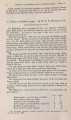
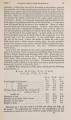
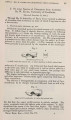
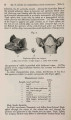
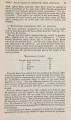
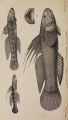
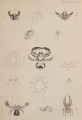
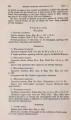
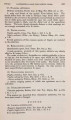
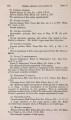
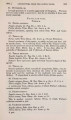
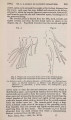
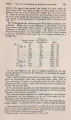
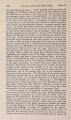
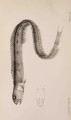
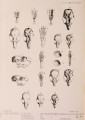
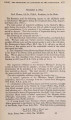
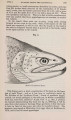
Show 1884.] HYBRIDS AMONG THE SALMONID.E. 585 from the Octagon pond at Craigend. These fish were raised from the eggs of Lochleven Trout, fertilized by Salmon-milt December 24th, 1881, and hatched March 9th, 1882. The specimen was a barren female, the ovisac 1 inch long, and 0*15 of an inch wide and very thin. Colours-dorsal fin with 3 rows of black spots along its base. On November 14th, 1884, the pond was again drawn, but all the fish appeared to be sterile. One specimen, 10 inches long, was removed ; it had 37 caecal appendages, which were well loaded with fat; its colours were silvery with black spots, while the pair-bands were still visible : it was a sterile male. These fish have not shown the tendency to jump out of the pond as seen in the young Salmon, which at this age are fertile, as are also hybrids between Trout and Char, and hybrid Char a year younger. As all live at the same place, the supposition is raised that sterility is the rule in hybrids between Salmon and Trout, and if so, such must prevent the continuation of such races in rivers. November 14th, 1884, about 12,000 Lochleven-Trout eggs were fecundated with the milt of three parrs and smolts, the smallest being 10 inches long, the middle-sized one 11, and the largest 12: the last had the parr-bands still visible. The eggs were placed in box no. 1 of the hatching-house. It will be interesting to ascertain if dropsies will occur, as they did last year when the male was a season younger ; while it seems probable that Shaw's fish, ten inches long, which were successfully employed to fertilize Salmon-ova, must have been of the same age as these. August 28th, 1884, a hybrid 6| inches in length was removed from fish-culture pond no. 3 at Howietoun. This pond is 20 feet long by 5 wide, and contains about 36 inches of water; it is of the same size as pond no. 4. Of these fish about 190 existed at this date, and all were in excellent condition. They are the progeny of Lochleven- Trout eggs which were fertilized by the milt of the American Char, Salmo fontinalis, on November 15th, 1882. The appearance of these fish was most striking and due to their bands; the race for distinction's sake was named and will in future be termed the Zebra1, in order to distinguish them from the other hybrids (Plate LVI. figs. 1 & 2). The following is a description of a specimen removed from the pond: - B. x. D. 13 (T 3 F). P- 13- V. 9. A. f, C. 19. L. 1. 128. Caec. pyl. 39, longest £ inch. inches. Total length 6*7 Length of head 1*5 Length of pectoral fin 10 Length of ventral fin 0*8 Length of caudal fin 1*0 Height of body 1*5 Eyes, diameter of 0*3 1 See Proc. Zool. Soc. p. 376 ante. |