| OCR Text |
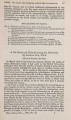
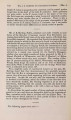
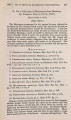
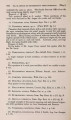
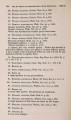
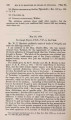
Show If884.] PROF. F.J. BELL ON THE GENUS AMPHICYCLUS. 253 in the upper jaw being 30 millim. instead of 72 as in the adul They evidently rep resent the narrow apical portion of the permanent teeth, which as growth proceeds wears off, and they are not in any case milk-teeth. As the first of the series, or premolar, is as fully developed as the one which follows it (or first true molar) it must either have no predecessor, or one which has disappeared at an early stage of intra-uterine life. 2. Studies in the Holothuroidea.-III. O n Amphicyclus, a new Genus of Dendrochirotous Holothurians, and its bearing on the Classification of the Family. By Professor F. J E F F R E Y B E L L , M.A., Sec.R.M.S. [Received March 28, 1884.] Among the valuable collections made during 1876 by Captain H. C. St. John, H.M.S. ' Sylvia,' in the Japanese seas were a few Holothurians ; these were not reported on along with the rest of the Echinodermata, which some years ago formed the subject of interesting communications from Prof. Martin Duncan, F.R.S., and Mr. Sladen *. Now that I am engaged in working through the collections of Echinoderms in the British Museum, the Trustees of which owe the specimens now under consideration to the generosity of Dr. Gwyn Jeffreys, F.R.S., I think it proper to direct the attention of the Society to two very remarkable specimens among these Holothurians which cannot be placed in any genus at present instituted. The lessons to be learned from these specimens, and the knowledge that has been acquired of forms unknown to Professor Semper, thanks chiefly to the labours of Ludwig and v. Marenzeller, lead, I think, to a reconsideration of the classificatory system and phylogenetic table which in 1868 was put out by Semper, to whom the student of Holothurians will always he under the deepest obligations. It is with diffidence that I propose to rearrange a family that has been studied by this distinguished naturalist. Description of the Specimens.-Body elongated, tapering at its hinder end. Oral tentacles in two cycles ; in the outer fourteen, of fair size, and more or less subequal ; in the inner ten, very small, arranged regularly by pairs, radial in position. Suckers confiued to the ambulacra, arranged in quite regular rows; in the bivial ambulacra they are set in pairs, but are a little more irregular and more crowded in the trivial ambulacra. Owing to the attenuation of the body in the hinder region, the rows of suckers approach one another. The interradii are altogether free of suckers. There are no signs of any calcareous pharyngeal plates. 1 Journ. Linn. Soc. (Zool.), vol. xiv. pp. 424, 445. PROC. ZOOL. Soc-1884, No. XVIII. 18 |