| OCR Text |
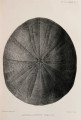
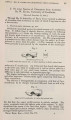
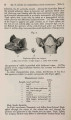
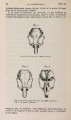
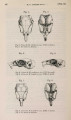
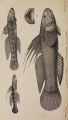
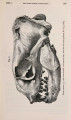
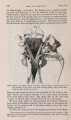
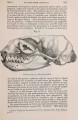
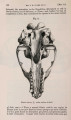
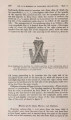
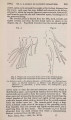
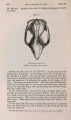
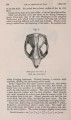
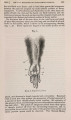
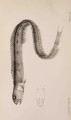
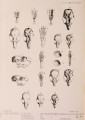
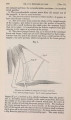
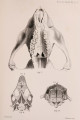
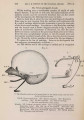
Show 566 MR. J. B. SUTTON ON THE CRANIAL ABCADE. [Dec. 2, 2. Observations on the Parasphenoid, the Vomer, and the Palato-pterygoid Arcade. By J. BLAND SUTTON, F.R.C.S., Lecturer on Comparative Anatomy at the Middlesex Hospital Medical College. [Received November 10, 1884.] (Plates LILT. & LIV.) In the well-known ' Lectures on the Elements of Comparative Anatomy,' 1864, Professor Huxley, in describing the structure of the Pike's skull, drawrs especial attention to a bone forming part of that fish's cranio-facial axis, which up to the time of the delivery of those admirable lectures had been denominated basi-sphenoid. Concerning this bone the Professor states : - " It differs from any of the ossifications of the basi-sphenoidal cartilage in Man, not only by extending backwards beneath the basi-occipital, but by stretching forwards beneath the pre-sphenoidal and ethmoidal cartilages to within a short distance of the anterior extremity of the cranium; and in the still more important circumstance that it is an ossification within the perichondrium, which can be stripped off, in skulls which have been macerated, or steeped for a short time in boiling water, without injury to the cartilage upon which it is developed. " Mr. Parker has shown, in his valuable paper on Balaniceps^, that the so-called basi-sphenoid of birds is developed from three ossifications- a central one, the true basi-sphenoid, and two lateral and inferior centres, the ' basi-temporals' (Parker), which appear to correspond with the lingula of Man. The thought readily arises that the single bone x (Plate LIII. fig. 1) may correspond with these two basi-temporal ossifications. The latter, however, appear to be cartilage ossifications like the lingula themselves; and upon the whole I think it will be safer, at any rate for the present, to regard the bone x as peculiar to the branchiate Vertebrata and to confer upon it the special name of 'parasphenoid' " (p. 170). For twenty full years has the name parasphenoid found a place in anatomical nomenclature, and as such it will probably continue to do so, but that it is a bone peculiar to branchiate Vertebrata is an opinion unsupported by facts and altogether untenable. It is one of the objects of this paper to show that its representative in the skulls of Mammalia is the bone known as the " vomer." It must of course seem presumption on my part to differ from Prof. Huxley on a subject to which he has devoted his critical mind for so many years ; nevertheless, I ask for unbiassed attention, as for some years past the question has occupied m y best thought and labour. Stated briefly, the relations of the parasphenoid amount to these in the Pike's skull:- It is a bone of membranous origin, having the shape and general appearance shown in Plate LIII. fig. 2. By its upper surface it is in relation with the under surface of the basi-occipital bone, the 1 Trans. Zool. Soc. vol. iv. |