| OCR Text |
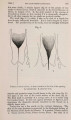
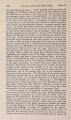
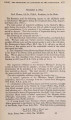
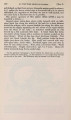
Show 398 MR. F. E. BEDDARD ON HAPALEMUR GRISEUS. [June 3, in appearance from the surrounding mucous membrane of the urogenital canal. On either side of the colliculus seminalis and somewhat beneath is a comparatively large oval aperture, which appears to be single, and communicates with the vas deferens and vesicula seminalis of its own side. By passing a fine bristle down the vas deferens from above, it was ascertained that the latter in reality is distinct from the duct of the vesicula seminalis, and runs along its inner wall as a fine tube, the external orifice being placed to the inside of that of the vesicula seminalis and only separated from it by the thickness of its own wall. In the majority of Lemurs the vas deferens opens separately from the vesicula seminalis and to the inside of it. In Lemur catta the orifices of both are situated on the upper surface of the colliculus seminalis; the vas deferens opens on to a small tongue-shaped process, which projects into the inner side of the crescentic aperture of the vesicula seminalis which nearly surrounds it. In Loris gracilis, Nycticebus tardigradus, and Perodicticus the orifices of the vasa deferentia and vesiculee seminales, although very close together, open separately. Prof. Huxley states of Arctocebus :-" The vasa deferentia terminate in the urethra by two apertures placed close together, upon the end, or rather the under surface, of a papilla-like colliculus seminalis, which is slightly bifid at its extremity. At first I took the notch which causes this appearance for the mouth of an uterus masculinus, which I imagined might lie on the elevated ridge which extends between the apertures of the vasa deferentia and those of the ureters ; but careful examination did not reveal the existence of any such structure. Two longitudinal folds of mucous membrane, along which the apertures of the prostatic ducts are situated, extend from the colliculus and form the lateral boundaries of a wide fossa, which it overhangs. This fossa receives at its upper and back part the ducts of two large oval sacs, which are perfectly distinct from one another, though their inner walls are united for some distance. The walls of these sacs are raised into oblique folds, and they lie at the back of the neck of the bladder behind the vasa deferentia, and occupy the place of the vesiculee seminales. As they do not communicate directly with the vasa deferentia, however, I am doubtful whether they ought to be considered as representing the vesiculee seminales, or as a large uterus masculinus." In Avahis laniger, Milne-Edwards figures and describes the vesiculee seminales as opening a long way behind the vasa deferentia ; while in Propithecus the same author states that the vesicula seminalis opens, together with the vas deferens of its own side, by a common aperture. There is therefore a considerable difference in different Lemurs between the relative positions of the apertures of the vesiculee seminales and vasa deferentia. Avahis laniger is at one extreme of the series and Arctocebus at the other; in this latter genus the disappearance of the posterior portion of the colliculus seminalis has caused the apertures of the vesiculee seminales to unite below the apertures of the vasa deferentia. In all other species that I have |