| OCR Text |
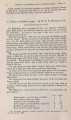
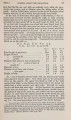
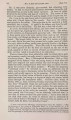
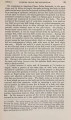
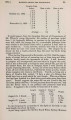
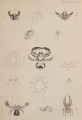
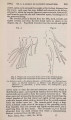
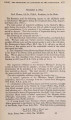
Show 198 REV. O. P. CAMBRIDGE ON TWO [Mai*. 18, The other new genus described in the present paper is founded on a very remarkable Spider from Ceylon, belonging to the family Gryp-tothelida, of which the typical genus is Cryptothele, L. Koch (Die Arachn. Austral, p. 239, pi. 20. fig. 2). The new genus Begillus may be readily distinguished from Cryptothele by several structural differences. Fam. THOMISID^E. ORNITHOSCATOIDES, gen. nov. Cephalothorax short, broad, as broad or as broader than long, moderately convex above and slightly tuberculose; caput short, truncate in front, and strongly compressed on its lateral margins. Eyes in two curved rows, the anterior shortest (the convexity of the curves directed forwards, and forming a crescent); small, not greatly differing in size, but the fore laterals are largest, and the four centrals smallest; those of the lateral pairs are seated on or at the base of tuberculose eminences. Falces strong, not very long, conical, and nearly vertical. Maxilla moderately long and strong, a little wider at the top than in the middle; rounded at the top on the outer side, and slightly leaning over the labium, which is about half the length of the maxillee, and of a somewhat oblong form rounded at the apex. Sternum oblong-oval. Legs strong, moderately long, 1, 2, 4, 3 ; those of the first and second pairs much the strongest and longest but nearly equal in length ; those also of the third and fourth pairs are nearly of equal length and strength. The tibise are rather strongly bent, and give the legs a peculiar character. All are somewhat roughened or tuberculose, especially those of the first two pairs, and furnished with spines of varied length and strength ; those on the tibiae and metatarsi of the two anterior pairs are strongest, the longest forming two parallel longitudinal rows beneath the joints. The legs terminate with two strong, curved, pectinated claws, beneath which is a small claw-tuft. Among the spines are one or two not very long, rather strong, of a pale colour or semidiaphanous appearance, on the upper sides of the femora ; these spines have a peculiar function as observed in one of the species, and may very possibly be of generic value, though spines of various sizes are found similarly situated in many other Thomisid genera, while their special function (if any) has not been yet observed, so far as I am aware, in other instances. The palpi terminate with a single pectinated claw. Abdomen broader behind than in front and truncated at both extremities ; the upper surface and hinder part more or less thickly covered with round or subcorneal, shining, or other tubercular elevations. The spinners are short, stout, and closely grouped within a somewhat circular sheath-like cincture much resembling the disposition of those of many Epeirids. |