| OCR Text |
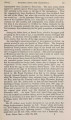
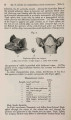
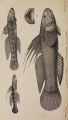
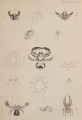
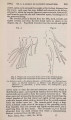
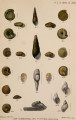
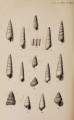
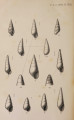
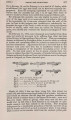
Show 1884.] 'LIGHTNING" A N D ' P O R C U P I N E ' EXPEDITIONS. 347 6. ODOSTOMIA ACUTA, Jeffreys. 0. acuta, Jeffr. in Ami. & Mag. N. H. 2nd ser. ii. p. 338 : B. C. iv. p. 130; v. p. 211, pi. lxxiii. f. 8. ' Porcupine' Exp. 1870: Med. St. 50, Benzert Road, Adventure Bank (dwarf variety). Distribution. Lofoten I. to E. Mediterranean and the Adriatic, Canaries and Teneriffe ; 0-120 fms. Fossil. Pliocene: Coralline and Red Crag, and Sicily. Post-tertiary : Belfast and Selsea. Clark was right in saying that the throat was grooved in some specimens. I have one of this kind which was dredged by Mr. Verkrtizen at Falmouth. Mr. Pidgeon remarks in his letter to me of the 9th November, 1874, that this species is "most abundant at Torquay, under stones at low water, spring-tides, but never unless associated with tubes of Serpula. To-day I found one stone which was crowded with them, nestling among the tubes ; neighbouring stones could not show a specimen, if they were free from Serpula." 7. ODOSTOMIA CONOIDEA, Broechi. Turbo conoideus, Brc Conch. Foss. Subap. ii. p. 659, t. xvi. f. 2. O. conoidea, B. C. iv. p. 127; v. p. 211, pi. lxxiii. f. 6. ' Porcupine' Exp. 1869 : St. 2, 13, 18. 1870: Atl. 6, 10, Vigo B., Setubal B., C. Sagres, 30; Med. off Jijeli, Benzert Road, Rasel Amoush, G. Tunis, Adventure Bank. Nearly all the specimens belong to the variety australis, a few to an intermediate form. Distribution. Hammerfest to the Archipelago and Adriatic ; ? Red Sea (Philippi); 0-130 fms. Fossil. Miocene, Pliocene, and Post-tertiary : throughout Europe and Rhodes. The synonyms are numerous. I have noted eleven, including Rissoa polita of Scacchi, Odontostoma sicula of Philippi, Eulima monodon of Requien, Odostomia nagli and O. sismonda of Seguenza. My friend the Marquis de Folin found a monstrous specimen on the northern coast of Spain which has a complete peristome. 8. ODOSTOMIA TENUIS1, Jeffreys. (Plate XXVI. fig. 4.) S H E L L oblong, slender, rather thin, nearly transparent, and glossy: sculpture none except exceedingly fine and close-set lines of growth, which are observable only under a microscope: colour whitish : spire elongated ; apex or nucleus rather prominent: whorls 6, somewhat compressed, gradually enlarging ; the last equals three fifths of the spire with the mouth placed upwards; suture rather shallow : mouth oval, slightly contracted above, curved below; its length does not much exceed one third of the shell; the inside is marked with half a dozen short grooves or striae in the direction of the spire, which are distinctly seen through the shell: outer lip sharp : inner lip folded back on the pillar and continuous with the 1 Slender or slim. |