| OCR Text |
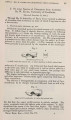
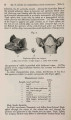
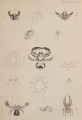
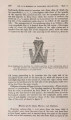
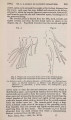
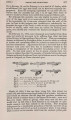
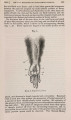
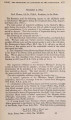
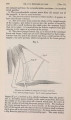
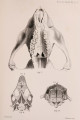
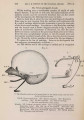
Show 1884.] NEW GENERA OF SPIDERS. 199 O R N I T H O S C A T O I D E S DECIPIENS. (Plate X V . fig. 1.) Thomisus decipiens, Forbes, P. Z. S. 1883, p. 586. Adult female, length rather above 6-i- lines. The general colour of this Spider is a hoary or yellowish ashy grey marked with black. The abdomen has a large, somewhat quadrate black patch at the middle of its hinder extremity ; on this patch are placed eight shining roundish dark-brown tubercles; the four largest form a transverse, unequally sided parallelogram at the fore part of the black patch ; the other four, which are much the smallest, form a longer transverse parallelogram immediately behind the other. At the hinder part also, on either side of the shining tubercles, are several strong tuberculiform eminences or prominences, of a similar kind to which are also four small ones in a transverse line at the extreme fore margin; some other depressed spots or pits are also disposed on the upper surface, with a dark blackish suffused patch at the middle of the anterior extremity, and another on each side just in front of the foremost lateral eminence. The cephalothorax has a black irregular patch on each side of the hinder part of the thoracic region. The ocular region is somewhat suffused with blackish, and an irregular black, somewhat V_shaped marking indicates the juuction of the caput and thorax. The two anterior pairs of legs have some black suffused markings on the upper side of the femora, the fore half (or rather more) of the tibiae, metatarsi, and tarsi of those two pairs being almost wholly black; while the two hinder pairs have only an irregular black marking here and there. The spines on the tibiae and metatarsi of the first and second pairs of legs are numerous, long, strong, and conspicuous. The pale spines (mentioned above) on the upper sides of the femora are used, according to Mr. Forhes's observations, to secure the Spider on its back to a patch of whitish silk spun upon the surface of a leaf. When so secured the Spider has the exact appearance of the droppings of some bird, and the white silk patch emerging irregularly outside the Spider has the appearance of the more liquid portion of the droppings flowing out and drying on the leaf1. The eyes of each row respectively are equidistant from each other, but those of the fore-central pair form a shorter line than those of the hind-central pair. The four central eyes form a square whose anterior side is the shortest ; and the height of the clypeus, which projects forwards, is nearly about equal to half that of the facial space. 1 Mr. Forbes has, since the above was printed, remarked to m e that in the two instances which came under his notice, the resemblance extended even to the running down of the fluid excreta towards the lower side of the sloping leaf, ending in a kind of knob. Mr. Forbes also expressly disclaims the idea of crediting the Spider with any conscious design, but he says "that the similitude is so exact that the Spider might have had consciousness-i. e. it could not have been more exact if the Spider did have it." Is not its exactness probably the result of the wraconsciousness of the Spicier ? Conscious design would possibly have resulted in failure and abandoning the plan, or at best in a more clumsy imitation. |