| OCR Text |
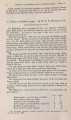
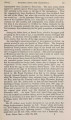
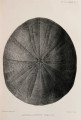
Show 1884.] SPECIES OF OREASTER. 83 to which one may suppose that the spines vary in length and strength. The first explanation that one would be led to give would probably be to some such effect as this. The specimen now under consideration is larger than Dr. Liitken's specimens because it is better provided with spines, and has therefore had less difficulty in maintaining its existence. On the other hand, we do not and never can know what Dr. Liitken's specimens might have accomplished in the way of growth had they not fallen victims to the zeal of a collector. All, then, that we can say is, that of known specimens of Oreaster gracilis the largest has the spines best developed. This statement does not, of course, exclude the possibility of smaller specimens being also well provided with spines: if it did it could never be allowed to pass by one who had gone over the collection in the British Museum. Inasmuch as it tacitly allows that small specimens may be well provided with spines on the dorsal aspect of the disk, it raises the next question as to whether that difference is one of race, of sex, or of an indefinite variability, not yet seized upon to the profit of the species, in other words, it raises questions which are beyond the ken of the cabinet naturalist, but not questions which cannot be satisfactorily investigated by those who are fortunate enough, as are some of our Australian fellow-subjects, to have these creatures living in their own seas. One will perhaps be pardoned the apparent truism if attention is directed to the fact that while a systematist measures spines by millimetres, a Starfish may have them scattered in great abundance over his whole body-in other words, accurate measurements must always be used in an intelligent fashion, note being made of the fact that a difference in lengtb which, when measured by the ruler, may amount only to i a millimetre, comes to be a matter of importance to a creature which numbers these spines by hundreds. In the investigation of the spinulation of Starfishes there is, surely, a wide field for the study of those mechanical causes with which the zoologist is concerned. OREASTER GRAYI, sp. nov. Pentaceros nodosa, Gray, Ann. N. H. vi. p. 277 (1841). As we use Linnaeus's name nodosus for the species which he no doubt so first named, we have to find another name for Gray's species. The following description is based on a specimen considerably larger than Gray's " type," which was obtained from Billiton:- R = 2*2r. Disk not high; arms very broad, even at the distal end; lophial ossicles with large tubercles in the place of more or less sharp spines ; the apical spines not disproportionately large. A few spines within the apical region. The superomarginal plates alone form the sides of the arm, they are about 17 in number ; the inferomarginals are more numerous bv one or two; of the former, some of the more distal are provided |