| OCR Text |
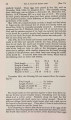
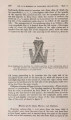
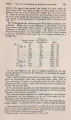
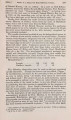
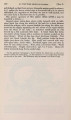
Show 1884.] MR. W. LECHE ON CHIROPTERA FROM AUSTRALIA. 53 Taph. affinis, Dobs., thus these three forms could be regarded as direct descendants of the same type, which through geographical separation have perhaps gained a certain permanence. The geographical range of the three above-named forms seems only partly coincident. Taph. affinis, var. insignis, is the most easterly, Taph. saccol&mus the most westerly, and between them comes the Taph. affinis, having been up to this time only found in Labuan and Sumatra. 5. MlNIOPTERUS SCHREIBERSI, Natt., Var. BLEPOTIS. The three specimens examined bv me correspand most closely with the description given by Tomes (Proc. Zool. Soc. 1858, pp. 121- 123) of his M. blepotis. Through the below-stated characteristics the animal in question differs slightly from the other forms of Miniopterus. (1) Inter-femoral membrane nearly naked, only at its base ou the dorsal side thinly covered with hairs. (2) The nose longer than in European specimens of M. schreibersi. (3) Above the base of the outer margin of tragus is a little round, triangular projection. (4) Length of the first upper premolar constitutes half in the form now described, in the European M. schreibersi less than half of the length of the second premolar. Measurements (female). millim. Length, head and body 74 »j i, ,> >> head 17 tail 54 forearm 45 tibia 19 From the above it is evident that the specimens in question differ from the European M. schreibersi, partly through the smaller size, partly through the characteristics above cited (2, 3, 4). Through the peculiarities mentioned under 3, they, on the other hand, approach N. tristis. The only difference between M. australis and the specimens indicated is described under 1 ; according to Dobson (/. c. p. 348), in M. australis half the interfemoral membrane is clothed. From the above it ought thus with certainty to be deduced, that M. schreibersi and M. australis are united through intermediate forms, which (provided one can judge from Tomes's description, without having seen his original specimens) most nearly correspond with M. blepotis, Tomes. But as Dobson has joined the latter with M schreibersi,so consequentlyM. australis ought not to be separated from M schreibersi, but to be regarded as a form of this species remarkable for its extended geographical diffusion and its consequent P°As has already been shown, an approach is indicated, through the appearance of a rudimentary lobulus of tragus, between the specimens |