| OCR Text |
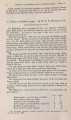
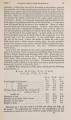
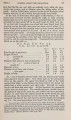
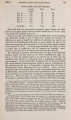
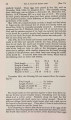
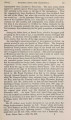
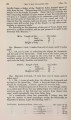
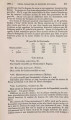
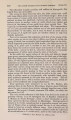
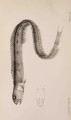
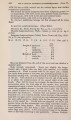
Show 32 MR. F. DAY ON RACES AND [Jan. 15, similarly treated. These eggs were placed in box 104, and on November 29th, 1883, 16 remained alive. The mortality among these 8000 eggs was as follows :-November 28, December 575, January 1818, February 297, or a total loss of 2718. The young fry were greatly deformed, many had their spines crooked, atrophy of its posterior portion, and a deficiency of the fins generally, more particularly of the caudal. May 1883, the young were about one inch in length and had about 11 finger-marks, the foremost four of which were mostly below the lateral line, while the remainder generally crossed it. I received one specimen from Sir J. Maitland, which was 0*8 of an inch long: its head and the anterior portion of its body was natural, but posterior to the dorsal fiu a general atrophy had occurred, and although the anal fin was fairly developed, the caudal portion was embryonic. It had six bars along each side. July 20th, the cross bands had become much wider, passing downwards to the belly and upwards towards the back, which, however, they do not reach, but small and irregular bands descend towards the spaces between the cross hands. The broad cross bands on the sides of the body are twice as wide as the interspaces, generally about nine in number, while another crosses over the head, covering a portion of the gill-covers, and a dark band runs along the middle of the dorsal fin. I removed three from the boxes, which were of the following sizes (in inches and tenths). Length of caudal fin. Height of body Number of bars ... No. 1. . 1*8 . 0*5 . 0*3 . 0*5 . 8&10 No. 2. 1*6 0*35 0*25 0*3 10 & 11 No. 3. 1*5 0*4 0*3 0*3 9&8 November 29th, the following fish was removed from the remaining 16. Total length 2*1 inches. Length of head 0*5 inch Length of caudal fin .... 0*4 „ Height of body 0*4 „ The finger-marks in this specimen appear to have been about 12, but are broken up into irregular shapes, reticulating over the body, which is of a yellow colour. Similarly along the back the fish appears covered with black spots on a yellow ground. Dorsal fin with two oblique black bands, a light upper edge, and a dark spot at the base of its first dorsal rays. There were 15 rows of scales between the adipose dorsal fin and the lateral line. It is interesting to observe that about one in six of the eggs of the Lochleven Trout impregnated by the American Charr failed to hatch, but double that number, or one in three, of the American Charr-e^s |