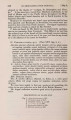
| OCR Text |
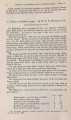
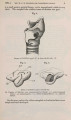
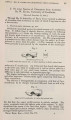
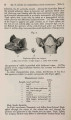
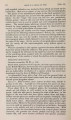
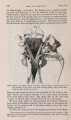
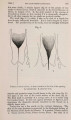
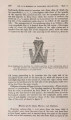
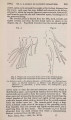
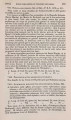
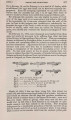
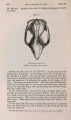
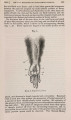
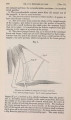
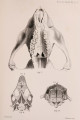
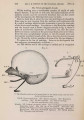
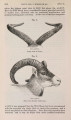
Show 544 MR. F. E BEDDARD ON THE [NOV. 18, de Madagascar,' but the letterpress has not yet appeared; M. Milne- Edwards no doubt intends to describe the osteology, and for that reason I have not entered into any description of it in the present paper. External Characters.-Nitzsch does not refer to the condition of the oil-gland in his account of the pterylosis of Scopus, merely remarking its presence. In the two specimens before me the oil-gland is distinctly tufted, and has three orifices at. its free end. I may also mention that there are 12 rectrices, and that the contour-feathers are furnished with an aftershaft. Visceral Anatomy.-The tongue is comparatively small and triangular, agreeing in this respect with Cancroma and Balaniceps alone among the Ardeidae; the other genera of the family possess a long slender tongue, extending nearly as far as the mandibular symphysis ; the tongue in the Ciconiidae is much as in Scopus. There is no crop ; of the liver the right lobe is larger than the left; there is a conspicuous gall-bladder present, its duct opening on to the ascending loop of the duodenum. There are two carotids with the normal course running up the neck side by side in the hypapophysial canal. Both jugulars are present, the right larger than the left. The syrinx is displayed in the two accompanying drawings Syrinx of Scopus umbretta. a, from before ; b, from the'side. (figs, a, b). There are a pair of intrinsic muscles inserted on to the second bronchial ring (fig. 1), fanned out at their attachment; the first bronchial rings are ossified, and closely applied to the preceding rings of the trachea; the rings of the bronchi are incomplete internally and united by membrane; there is a well-developed bony pessulus, a prolongation of the last tracheal ring. The bronchidesmus, as Prof. Garrod has termed the fibrous membrane uniting the two bronchi, is incomplete, not extending as far forward as the point where the two bronchi bifurcate. The syrinx of Scopus is therefore not at all Stork- |