| OCR Text |
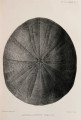
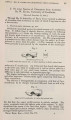
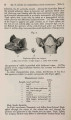
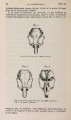
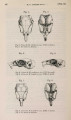
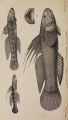
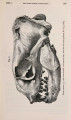
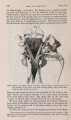
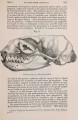
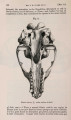
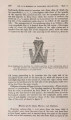
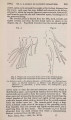
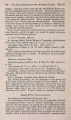
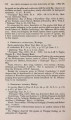
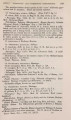
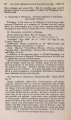
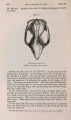
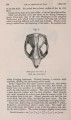
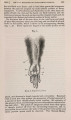
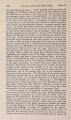
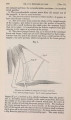
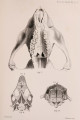
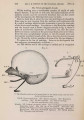
Show 1884.] PROF. F. J. BELL ON ECHINANTHUS TUMIDUS. 41 In this last statement I feel able to include the fossil forms, in review of which I was very greatly aided by the wide knowledge and kind courtesy of Mr. Etheridge, F.R.S. I proceed first to give a detailed account of the specimen in my hands, in connexion with which the careful figures may be suitably studied. Description of the Specimen.- Test high, swollen, longer than broad, flattened in the neighbourhood of the apical area, sloping gradually at the sides, but sloping rather more sharply anteriorly than posteriorly; apical area a little anterior to the true centre of the test; anus exactly marginal, looking backwards and downwards, and set almost exactly at an angle of 45° to the actinal surface of the test. The actinostome deeply sunken, the five interambulacral sutures only faint grooves. The poriferous zones very remarkable, being wider where they terminate than at any other point along their course, and with a faint tendency to be lyre-shaped. The pores vary very much in size ; in the anterior (odd) ambulacrum the pores of the outer series are easily seen only in the last fourth of the row, and here they are large ; one row, that to the left of the specimen, has, however, only one eighth of its course provided with large pores ; in the inner rows the pores are smaller than the large pores of the outer rows, and a larger number are subequal, the largest are at the distal end ; in the left inner row there are a few scattered large pores near the proximal end. In the right anterolateral ambulacrum there are no pores as large as some of those in the anterior ; most of those in the two outer rows are quite small, and in the inner some, though not so many as in the anterior ambulacrum, are of fair size and subequal. In the left anterolateral ambulacrum the outer rows have a few scattered pores large enough to be seen without the aid of a magnifying glass, near the apex; in the inner rows the number of fair-sized subequal pores is hardly less than in the anterior ambulacrum. The outer rows of the right postero-lateral ambulacrum repeat very much the characters of those in the anterior ambulacrum, and in the inner rows there are a large number of fair-sized subequal pores. In the left postero-lateral the pores are still better developed, and nearly both members of every pair are quite distinctly seen ; as in the preceding the larger pairs are in the outer rows. This predominance in the size of the pores of the outer row is a very familiar phenomenon among the Clypeastridae. The grooves which pass from pore to pore in every pair are shallow, and are almost as well indicated by the row of tubercles which alternate with them; these tubercles are of fair size, twice as large as in Echinanthus testudinarius, and there are, as a rule, five in each row; they are arranged in very regular parallel rows. Distally to the paired pores a pair, or two or three scattered pores are to be observed, in the left half of the anterior ambulacrum, both halves of the right antero-lateral and postero-lateral ambulacra, the two halves of the left postero-lateral, and the anterior half of the left antero-lateral ambulacrum. There is nothing, however, in the |