| OCR Text |
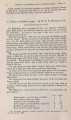
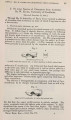
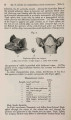
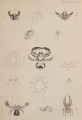
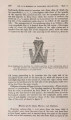
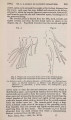
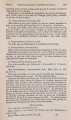
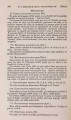
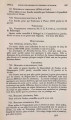
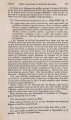
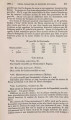
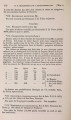
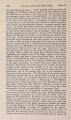
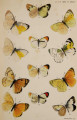
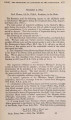
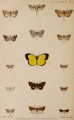
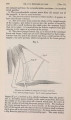
Show 438 LIEUT.-COL. c. SWINHOE ON LITTLE-KNOWN [June 17, from any of the species yet described, the embossed spot on the internal area of the fore wings, peculiar to this group, is also very distinct, and the transverse spot at the end of the cell is small and pale. Below, the general colour of both wings is pale orange-yellow, with the inner border of the apex of the fore wings showing through the wing, and a faint shade of a discal band on the hind wings ; otherwise both wings are immaculate. 2 . Above, ground-colour darker and yellower than the males, irrorations at the base, the spot at end of the cell of fore wings, and the black-brown markings on both wings generally paler and broader. Below, it has the general appearance of the male, but slightly darker, with the addition of two pale-brown spots in the interno-median interspace. Expanse of wings, 8 2 2T\> to lr s 0 inch. This is a very distinct species. In coll. C. Swinhoe. Group 7. Type Teracolus vestalis, Butler. 8. T E R A C O L U S R O R U S , n. sp. (Plate X X X I X . 8, fig. 8.) Sukkur (North Sind), February 1882. 8 2 • Resemble on both surfaces the female of T. puellaris, Butler, even to the third spot near the outer margin below being extended downwards and expanding upon the inner margin, differing not only in this from T. ochreipennis and T. intermissus (of which I have many examples), but is larger, and the outer border of secondaries is much darker and deeper, fines down a little, and stops short of the anal angle. I have examined a long series taken at the same time and place. Expanse of wings, 8 2 l*iV to I-fa inch. In coll. C. Swinhoe. As this group, of which T. vestalis is the type, is very indifferently understood, it might be as well to give their distinctive characteristics, which apparently never vary, and by which each of the following species can readily be identified :- T. vestalis, Butler. Below, both sexes, both wings sulphur-yellow, fore wings with three black spots near outer margin below the median branches, the centre one the largest. T. ochreipennis, Butler. Below, both sexes with the three spots on the fore wings as in T. vestalis ; hind wings in both sexes flesh-colour, marginal border of the hind wings above unmarked and like T. vestalis. T. intermissus, Butler, P.Z.S. 1883, p. 152, pi. xxiv. fig. 4. Similar to T. ochreipennis below; above, the marginal band of the hind wings is narrow and wavy. T. puellaris, Butler. Below, fore wings with the lowest of the three spots extending downwards and expanding upon the inner margin in both sexes. 8 . Both wings below sulphur-yellow. 2 . Fore wings below sulphur-yellow, hind wings flesh-colour. |