| OCR Text |
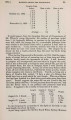
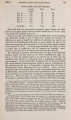
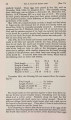
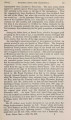
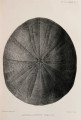
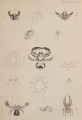
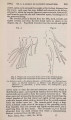
Show 68 PROF. F. J. BELL ON THE [Feb. 19, Adambulacral spinulation essentially triplacanthid, but care is required in determining the characters of the third row. The plates which carry the spines are strongly convex towards the ambulacral groove; six spines in each innermost series, of vvhich the median are distinctly the longest; none are particularly delicate. In the middle row there is generally only one spine, which is then of considerable stoutness ; sometimes a smaller is added to it; those of the third row are most conspicuous when they form a process about half as prominent as the median spine; sometimes it is difficult to distinguish them from the granulation of the disk. The arrangement of the ventral ossicles may be made out, as the granules which invest them are loosely packed and are of some nze ; the granules on the marginal plates are much more closely set, are smaller, and form a more regular pavement; the granules are very numerous on the dorsal aspect, tending to be convex, but differing a good deal in size and shape ; the poriferous areas are small, as the ossicles are individually large ; the lophial series of ossicles have their long axes set at right angles to the long axis of the arm ; on either side another series of ossicles reaches to the ends of the arms, while another proceeds about halfway down ; some three or four ossicles form a short series outside these last; so that the whole disk is marked by regular rows of convex ossicles. The madreporic plate, as so frequently happens in this genus, is not far from the apical region, is of a moderate size, and fairly prominent. Colour, when first dried, probably brownish. Measurements:-R = 60, 46, 45, 41 ;r = 29, 22, 19, 18; greatest width of arm 19, 18. Hab. Australia (Swan River ; Fremantle). OREASTER CHINENSIS. Pentacercs chinensis, Gray, Ann. N. H. vi. p. 276. Oreaster chinensis, M . Tr. Syst. Ast. p. 46. The type of Gray's species is now lying before me, and it answers so well to the description given by Miiller and Troschel that I feel confident that Mr. Edgar Smith took a correct view when he attached to its board the words, " The same, I believe, as Oreaster chinensis, Miiller and Troschel." It will be convenient to give here a diagnosis of the species, couched in similar terms to the others here described. R=2*7?*. Disk rather high, arms pretty wide at their base, narrowing towards the tip ; lophial ossicles without spines, save the apical, which are rounded and knob-like; four spinous projections within the apical region. 18 plates in either marginal series ; the inferior quite ventral in position, and not set regularly (in the middle line of the arm) below the superior ; in the angle of the arm one or more of the superomarginals may be provided with short but sharp spinous projections ; all or nearly all the inferomarginals bear short spinous processes ; bare of granules. |