| OCR Text |
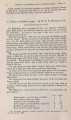
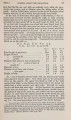
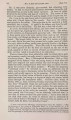
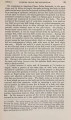
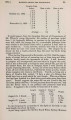
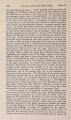
Show 560 MR. J. H. GURNEY ON HUHUA NIPALENSIS. [Nov. 18, island are of smaller size than those from other localities, and proposed for them the subspecific designation of " orientalis minor ;" but in his ' Review,' subsequently published, he stated at p. 5 of the "Aves Noctuae " that this small race also inhabits Borneo and the Malay peninsula, and this is somewhat corroborated by the circumstance of a specimen from North-west Borneo, recorded by Mr. Sharpe in P.Z.S. 1879, p. 245, agreeing in its wing-measurement with the smaller rather than with the larger race. On the other hand two individuals from the Barison Mountains in Sumatra, which are preserved in the Norwich Museum, agree in their dimensions with the larger form. The African species which appear to belong, more or less closelv, to the same group as the two Asiatic Owls above referred to are the following:- HUHUA POENSIS (Fraser), figured by Dr. Sclater, P. Z. S. 1863, pi. 33, and by Mr. Sharpe, Ibis, 1869, pi. 4.-Hab. Guinea, extending southward to the R. Gaboon, and also occuring in Fernando Po. H. LACTEA (Temm.), figured by Temminck in PI. Col. yd. 4.- Hab. Most of the forest-regions of Africa, south of the 20th degree of north latitude. Mr. Sharpe in his Catalogue of Striges, p. 35, has shown, I think, satisfactorily that the southern specimens of this Owl, for which the subspecific appellation of' "verreauxi" was proposed by Bonaparte, are not really separable from the typical H. lactea, which was originally described from an example obtained in Senegal. I mention this, as I expressed a contrary opinion in the 'Ibis,' 1868, p. 148. H. CINERASCENS (Gue'r.), figured by Des Murs in the Zoology to Lefebvre's 'Voyage en Abyssinie,' pi. 4.-Hab. Between about the 4 th and 16th degrees of north latitude. I suspect, however, that the Owl recorded by Du Bocage in the ' Ornithologie d'An-p,?' a*.' P*. 5^* a s " u n m*^e adulte du B. maculosus recu du Humba, Vindication 'iris brun' ecrite de la main de M . d'Anehieta," may in fact have been an example of H. cinerascens, which, in that case, ranges much further south than the limits above noted. Huhua cinerascens agrees with H. nipalensis, H. orientalis, H. poensis, and II. lacteus, in having a dark brown iris ; but it differs from them in having the bill black, with the tip only of a yellowish horn-colour, instead of the whole bill being horn-yellow. It is also worthy of remark that the upper eyelid is more or less pink and bare of feathers in all the above-named species except in H. orientalis, in which the eyelid has been recorded as yellow by Mr. Davison in 'Stray Feathers,' vol. vi. p. 31. In plumage H. cinerascens very closely resembles Bubo maculosus, and though the dimensions of the specimens of H. cinerascens which I have examined are slightly less than those of B. maculosus, it is not easy to distinguish the former in the skin from the smaller |