| OCR Text |
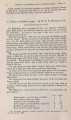
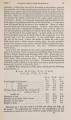
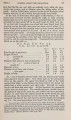
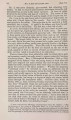
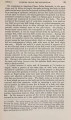
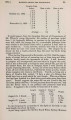
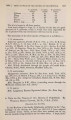
Show 1884.] SPECIES OF OREASTER. 85 valvular pedicellariae are, on the other hand, pretty numerous, and are especially rich along the sides of the ambulacra. The marginal plates are very regularly granulated, and small valvular pedicellariae are not unfrequently developed. The granulation on the upper surface is more delicate. The pore-areae are very regular, triangular, and of moderate size ; at the nodal points spines or spinous tubercles are always developed ; and we have here one of the rare cases of the development of dorsal without ventral spines. Colour (dry) more or less white. Measurements :- R 133 115 110 r 52 37' 42 Greatest breadth of arm. .. . 35 24 25 Hab. China (Swatow). OREASTER TROSCHELI, sp. nov. A triplacanthid form, most nearly allied to 0. orientalis, but distinguished from it by the following characters:-There are not more than three spines in the second row of adambulacral spines on each plate; the spines are, as a rule, developed only on the distal marginal plates, and those that do not carry spines bear a number of valvular pedicellariae. R = 3 /*. Disk not elevated ; arms distinct, not wide at their base, and tapering very gradually. A median dorsal row of fairly well-developed spines ; the five apical spines very strong ; most of the angles of tbe poriferous areae on the disk are provided with spines ; there are no spines on the ventral plates. About 25 superomarginal and 27 inferomarginal plates ; the latter are confined to the abactinal aspect, save at the end of the arm. The superomarginals are very high in the angles, but are shorter along the sides of the arms; in exceptional cases a spine or two may be developed on them in the proximal, but, as a rule, they are confined to the distal half of the arm. They are often well developed sharp processes. Owing to the position of the terminal superomarginals, the two last spines are set quite on the abactinal surface. The spines on the inferomarginals are rare and small ; but these, as well as the non-spinose superomarginals, are richly provided with pedicellariae. Adambulacral spines in three rows ; the innermost delicate, short, about ten in number; in the middle row there are two or three stout spines, and in the outermost two or three, not quite so regularly developed as the rest. The immediate buccal armature is formed by the elongation and strengthening of the spines of the lowest row. The ventral ossicles are fairly distinct from one another, and are very richly provided with pedicellariae. A considerable number of pedicellariae are likewise developed on the abactinal aspect of the disk and arms ; like all those in this species, they are sessile and valvular. The pore-areae are large and numerous, so that the reticulation of ' Shrunk in dying. |