| OCR Text |
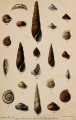
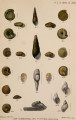
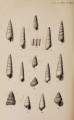
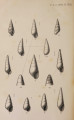
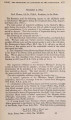
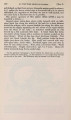
Show 1881.] 'LIGHTNING' A N D 'PORCUPINE' EXPEDITIONS. 367 E. nitida of Philippi, but apparently not Melania nitida of from the Paris Basin. Extremely variable in size, length of the spire, comparative slen-derness, and breadth of the last whorl, as well as in a slight degree of curvature. Many species could easily be made out of it. In E. polita (especially the young) the periphery is angulated, but never in the present species. Cantraine's description is too short to be satisfactory, viz.: "Testa parva, subulata, recta, vitrea, levi. Alt. 5 lin. diam. 1|." 6. EULIMA DISTORTA, Defiance. Melania distorta (Defiance), Deshayes, Descr. d. Coq. foss. des environs de Paris (1824), t. ii. p. Ill, pi. xiii. f. 24, 25. E. distorta, B. C. iv. p. 205 ; v. p. 214, pi. lxxvii. f. 5. 'Porcupine' Exp. 1869: St. 9, 18 (and var. gracilis), 25 (and var. gracilis), N. Channel. 1870: Atl. 13, Vigo B., 29-34; Med. G. Tunis, Adventure Bank. Distribution. Lofoten I. to the Adriatic and Archipelago, Madeira (Watson), Canaries (d'Orbigny and McAndrew). Off Sahara and west coast of Africa ('Talisman ' Exp.), Azores (Drouet), New England (Verrill), St. Vincent's, West Indies (Guilding), Ma-zatlan (P. Carpenter), N. Japan (St. John)\ ; 0-1261 fms. Fossil. Pliocene: Red Crag (A. Bell)!, Italy. Post-tertiary: Norway, Ayrshire, and Rhodes. I regard as synonyms of this abundant and widely spread species, Bissoa sinuosa, Scacchi ; Turbo curvatus, Chiereghini (MS. only) ; Balcis arcuata, Leach (1852) ; and E. philippii, Weinkauff (1867). Judging from the description and figure of the Eocene species in the above-cited work of Deshayes, I should have been inclined to consider it distinct from the recent species ; but having lately received, through the kindness of Dr. Fischer, typical specimens of the former, I have carefully compared them with many hundred specimens of the latter, and I feel myself conscientiously bound to unite them. Some specimens of both forms have the last whorl larger in proportion to the next, or else have the outer lip more or less flexuous; the degree of curvature (which is occasionally double or flexuous) differs considerably, and the periphery is now and then somewhat angulated or keeled. The varietv gracilis is usually straight instead of being distorted or curved ; but after a long and close examination, I have failed in discovering a single character which would justify its separation from the typical form as a distinct species. Both are equally common and generally distributed with intermediate forms. Professor G. O. Sars found this species living in a quasi-parasitic or "commensal" state inside Holothuria intestinalis. 7. EULIMA GLABRA \ Jeffreys. (Plate XXVIII. fig. 2.) S H E L L awl-shaped, rather strong, semitransparent, and of a lished lustre: sculpture none: colour whitish, with a faint tinge P * Smooth. 25* |