| OCR Text |
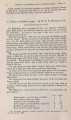
Show 362 DR. GWYN JEFFREYS ON THE MOLLUSCA OF THE [May 20, ' Porcupine ' Exp. 1869 : 3, 6. 1870 : Atl. 6, 9, 26-29 ; Med. Rasel Amoush, Adventure Bank. Distribution. Finmark to the Mediterranean, Canaries, Madeira, off C. Verd Land west coast of Africa ('Talisman ' Exp.); 12-1192 fms. Fossil. Miocene : Vienna Basin (Homes)!, N. W . Germany (Philippi). Pliocene : Biot and throughout Italy. Post-tertiary : Christiania, Rhodes ; 0-100 ft. Varies in the length of the spire and in the comparative breadth of the shell. 47. ODOSTOMIA COMPACTILIS, Jeffreys. O. scilla, var. compactilis, B. C. iv. p. 169. Eulimella compactilis, G. O. Sars, Moll. arct. Norv. p. 208, t. 22. f. 15. ' Porcupine' Exp. 1869 : St. 4, 18, 23. 1870 : Atl. 3. A single specimen from each station. Distribution. Lofoten I. and W . Norway, Shetland and Hebrides ; 50-300 fms. Possibly O. (Eulimella) superflua of Monterosato, from Palermo. 48. ODOSTOMIA ACICULA, Philippi. Melania (afterwards Eulima) acicula, Phil. Moll. Sic. i. p. 158, t. ix. f. 6. O. acicula, B. C. iv. p. 170 ; v. p. 213, pi. lxxvi. f. 6. ' Porcupine' Exp. 1869 : St. 18, 19, 25, the Minch. 1870: Atl. 3, 9, Vigo B., Setubal B., 26-28, 31-34 ; Med. 55, Benzert Road, Rasel Amoush, G. Tunis, Adventure Bank. Distribution. Everywhere in the eastern portion of the North Atlantic from Bergen to the Bay of Biscay, as well as in the Mediterranean and Adriatic, Corea (St. John) ; 8-645 fms. Fossil. Pliocene: Red Crag, Biot, and Italy. Post-tertiary: Christiania and Caithness. Some specimens from different localities exhibit a more or less conspicuous tooth. As to the specific name, Monterosato observed that long before Philippi's work, Lamarck had used it for another species (a Grignon fossil) of the present genus ; but the figure (pi. 60, f. 9) in the 8th volume of the ' Annales du Museum,' which Deshayes in his second edition of the ' Histoire naturelle des animaux sans vertebres,' refers to the Auricula (acicula) of the 6th volume of the ' Annales,' can hardly be correct, because none of the other figures in the same plate correspond with either the numbers or the brief descriptions given by Lamarck in his list of species. Indeed, Deshayes says, as to Auricula acicula, " II est tres-probable que cette espece n'est point une Auricule, mais une Tomatelle allongee." The genus Auricula of Lamarck was a heterogeneous assemblage of species, and included Melampus, Actaon or Tornatella, Odostomia, Pyrami-della, and Ringicula. The peculiar character of the Pyramidellida, viz. the sinistral nucleus, was not noticed by Lamarck or Deshayes. |