| OCR Text |
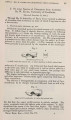
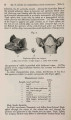
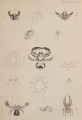
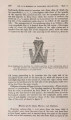
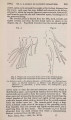
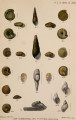
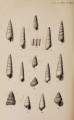
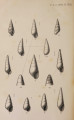
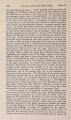
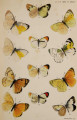
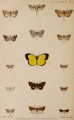
Show 444 ON BUTTERFLIES OF THE GENUS TERACOLUS. [June 17, brown spot outside on the next interspace below, a spot at the end of the cell, and a double spot in the centre of the interno-median interspace. Hind wing white, slightly powdered with rosy grey near the base ; a discal series of five black-brown spots, from the costa downwards within the veins, a marginal series of five similar spots on the veins; fringe sulphur-yellow. Underside marked and coloured exactly as in the males with the addition in the fore wings of the fifth discal spot, and the interno-median spot; basal third suffused with sulphur-yellow ; secondaries with a clear-cut ringlet of red-brown, at the end of the cell. Expanse of wings, 8 1 fjj to l-j&j, 2 2 to 1^ inch. Most of the females are very diminutive. I have a pair of this species from Sukkur taken in January 1882, and two females in m y collection marked W . and J. Canal. In coll. C. Swinhoe. 21. TERACOLUS TAPLINI, n. sp. (Plate XL. 6* $, f. 8 & 9.) 8 Bombay, $ Poona, M a y 1883. Near to T. sanguinalis, Butler, the primaries shorter, with less oblique outer margin, the apical patch of carmine of a brighter clearer colour, with its inner border in-arched towards the costa in the male; the costal border and basal area less strongly dusted with grey scales ; secondaries in both sexes with the blackish marginal spots well separated. The ground-colour of the female decidedly whiter than in T. sanguinalis, which is suffused with sulphur-yellow ; under surface of the secondaries in the male flesh-coloured instead of white, of the female creamy white instead of yellowish. Expanse of wings, 8 2 1 xV inch. 8 in coll. B. M . 2 ^ coll. C. Swinhoe. 22. TERACOLUS SIPYLUS, n. sp. (Plate XL. 6* 5, f. 10 & 11.) Zanzibar (Moir). Comes between the T. danae and T. etrida groups : is shaped like the former, but has the apical patch of the orange-colour of the latter. 8 . Above white. Fore wings-costa black, base deeply irrorated with black, with long pale bluish-grey hairs, the irrorations running along the inner margin in a broad diffused band for two thirds of its length ; apical patch large, with a deep all-round black border, the outer one running into the veins, forming long teeth, the inner one thickening downwards to the first submedian nervule, and from thence in an even line to the hinder angle. Hind wing with the base irrorated as above, with a band on the costa corresponding to the band on the fore wings; outer border deep and continuous. Below white. Fore wings-costa pale black, outer border of same colour marking the veins ; apex with a broad orange-red band run-ing across, with a brown band through it, the black band on the inner margin showing through the wing. Hind wing with the basal half of the costa orange-red, outer border with the band showing through |