| OCR Text |
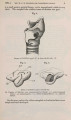
Show 466 DR. ST. GEORGE MIVART ON THE DEVELOPMENT [June 17, and other animals, and also of our own highest and most complex instinctive actions. I will now revert to the consideration of certain actions, in ourselves and other animals, which actions are not generally reckoned as " instinctive." The characters presented by the actions of the lowest animals may serve as an introduction to them. In the first place let us glance at those actions which are termed " reflex." Herein it is commonly supposed that the living mechanism occasions a prompt responsive muscular action upon the occurrence of some unfelt nerve-stimulation. The best-known examples are the appropriate actions, in response to stimuli, performed by a decapitated Frog, and those which the lower limbs of a Man may execute when the nerves of his feet are stimulated after his spinal cord has been so injured that he has lost all power of sensation in his inferior extremities. It has been objected by the late Mr. G. H. Lewes and others that we cannot be sure but that the spinal cord itself "feels." But there is often an ambiguity in the use of the term "to feel." By it we ordinarily mean a "modification of consciousness," but experiences such as those before adverted to, and which I have provisionally called " unfelt sensations," show clearly. that effects may be produced by surrounding agents on our sense-organs without the intervention of consciousness, similar to those produced on them when they do arouse consciousness. Without then entering into any discussion as to whether " sentiency " may or may not be attributed to the spinal cord, it seems evident that some definite term is required to denote those modifications of our being which have here been provisionally termed " unfelt sensations." It is obviously very difficult, probably impossible, to draw any hard and fast line between reflex action, unfelt sentiency, and such unconscious, instinctive impulses as have been above referred to in speaking of Instinct in man. There is also another class of organic vital actions which seem to have a certain affinity both to reflex action (from their perfect unconsciousness) and to Instinct, from their being directed towards a useful hut unforeseen end. The class of actions here referred to are those which relate to the repair of injuries and the reproduction of lost parts. In a process of healing after a wound, a true secretion is poured forth of intercellular substance in which cells are abundantly formed, and, by a process of transformation, vessels, tendons, nerves, bone, and membrane all arise, as they originally first arose in the embryo, from undifferentiated cellular substance. In a case of broken bone, the two broken ends soften and a substance is secreted which becomes at first gelatinous, often afterwards cartilaginous, and finally, osseous. But not only distinct tissues, but very complex teleological structures, such as admirably formed joints, may be reproduced. Thus we read1 that "a very interesting example is recorded by Mr. Syme, in which he had the opportunity of dissecting the new joint, 1 See Mr. Timothy Holmes's ' System of Surgery,' 3rd edition, vol. iii. p. 74(i. |