| OCR Text |
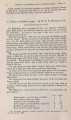
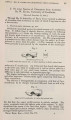
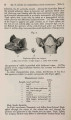
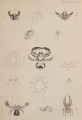
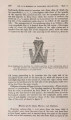
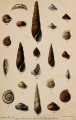
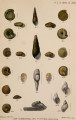
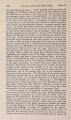
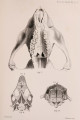
Show 1884.] ' L I G H T N I N G ' A N D ' P O R C U P I N E ' E X P E D I T I O N S . 119 There are already too many names for this abundant and widely distributed little shell; but I fear that some of the modern species-makers will contrive to invent a few more to the great detriment and confusion of science. Quousque tandem abutentur patientia nostra? 22. RISSOA ANGULATA l, Jeffreys. (Plate IX. fig. 5.) S H E L L forming a short and regular cone, thick, opaque, rather glossy: sculpture, 10-12 strong and slightly curved longitudinal ribs on each of the body- and penultimate whorls, those on the latter whorl being sometimes confluent or else some being much finer than the others ; the ribs on the body-whorl are not continued below the periphery, which is distinctly angulated ; there are no traces of spiral strise; the upper whorls are quite smooth : colour yellowish brown or dirty white : spire short: whorls 4, compresssed ; the last occupies more than half of the spire; apex blunt: suture slight: mouth obtusely triangular: outer lip sharp, not crenated within: inner lip thickened : pillar imperforate. L. 0*075. B. 0*05. 'Porcupine' Exp. 1870: Med. St. Adventure Bank. Several specimens, apparently semifossilized or having the interior filled with small agglomerated fragments of a siliceous nature. Differs from R. ehrenbergi, Philippi, according to his description and figure, in being more regularly conical, having 4 instead of 6 whorls and fewer ribs, and being destitute of spiral striae. 23. RISSOA ALBELLA, Loven. R. albella, Lov. Ind. Moll. Scand., var. sarsii, p. 25 : B. C. iv. p. 29 ; v. p. 207, ph lxvii. f. 6. 'Porcupine' Exp. 1870 : Med. St., Adventure Bank. Distribution. Norway and Sweden, Kiel Bay, Shetland, Hebrides, Bantry Bay, Southampton, Dalmatia, and Southern Italy ; lami-narian zone. Fossil. Post-tertiary: Christiania district, Uddevalla, Apulia, and Oretoin Sicily; 0-100 ft. R. cenonensis of Brusina and R. targionii of Appehus, appear to be also varieties of the present rather variable species. The variety sarsii bears the same relation to the typical form as the var. interrupta has to R. parva ; the principal difference between R. albella and R. sarsii consists in the latter having more convex whorls, and consequently a deeper suture, a slighter labial rib, and in the coloured markings. m I have satisfied myself that this is not the Paludma benzi of Aradas judging from authentic specimens of that species. Nor do I consider it R. ehrenbergii of Philippi, which he found among seaweeds brought by Ehrenberg from Cattaro ; it may have been a mistake as to the locality, as well as in other cases of Red-Sea shells, owing to the misplacement of tickets. 1 Angular. |