| OCR Text |
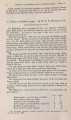
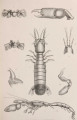
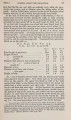
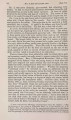
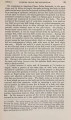
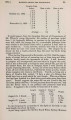
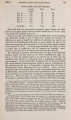
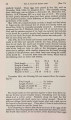
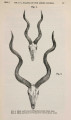
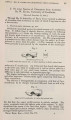
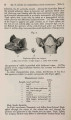
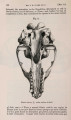
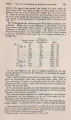
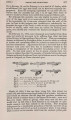
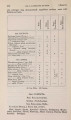
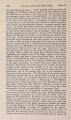
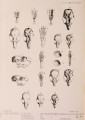
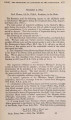
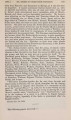
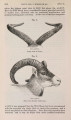
Show 1884.] MR. W. T. BLANFORD ON HEADS OF OVIS POLL 329 surface very convex. In the first named all the edges are rounded in the latter all with the exception of the fronto-nuchal. The details given by Messrs. Brooke show that these distinctions are not constant; in both forms surfaces and edges grow more rounded in older individuals. Precisely the same conclusions may be drawn from the series now exhibited. 2. In O. karelini the axis of the terminal portion of the horn is parallel with the axis of the basal portion. In 0. poli the axis of the terminal portion diverges more from the skull than that of the basal portion. This difference depends entirely on the degree of divergence, which is shown to vary and to pass by insensible gradations from one form to the other. 3. In O. karelini the horns are said to form a spiral that would fit on a cone with the base towards the skull; in 0. poli the base of a cone on which the horns would fit is away from the skull. I doubt if this character is of any importance; it is not noticed by Sir V. Brooke. If there be any distinction, it, like the last, probably depends on the degree of divergence of the horns. 4. In O. poli the horn is more than four times the length of the skull, in O. karelini only three times as long. But in some of the specimens of the latter, measured by Messrs. Brooke, each horn was more than 3£ times the length of the skull; and in the heads now exhibited, horns (e.g. no. 11) having the curve of O. karelini are 63 inches in length, or more than four times as long as any skull measured. The only conclusion to which I can come is, that there is no constant difference of specific value between Ovis karelini and O. poli. Mr. R. Bowdler Sharpe exhibited and made remarks on a second specimen of the new European Nuthatch (Sitta whiteheadi) from Corsica, described at the Meeting on April 1st. (v. s. p. 233.) This specimen (a male) had been likewise obtained by Mr. Whitehead. Dr. J. G. Garson exhibited and remarked upon a specimen of Lithodes maia, the northern Stone-Crab. The following papers were read : - |