| OCR Text |
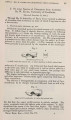
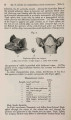
Show 334 MR. F B. BEDDARD ON THE ISOPODA COLLECTED [May 20, usually differ in the two sexes, are the same in this species. The also are larger than the females, the largest male specimen in the ' Challenger' collection measuring 34 millim. in length and 31 millim. in breadth, while the length of the largest female specimen is only 32 millim. in length by 26 millim. in breadth. In both sexes the body is roof-shaped, sloping gradually downwards on either side from the median line, which is distinctly keeled; the posterior margin of each segment has a short tubercle in the median line. The cephalic shield has the same texture as the rest of the body, and hardly projects above the level of the first thoracic segment. The latter is not divided into two portions by a transverse suture; it is prolonged anteriorly into a short rostrum, and a ridge, which extends on either side from the rostrum to the lateral margins of the shield, divides off the antero-lateral portions as in Serolis bromleyana. The second, third and fourth epimera are separated by a distinct suture from the rest of the segment. The caudal shield is irregularly pentagonal in outline ; the posterior extremity is slightly turned up ; there is a distinct median carina, which divides into two at the upper end; on either side of this is another Y-shaped ridge, inclined at a slight angle to the longitudinal axis. The second pair of antennae are distinctly longer than the anterior pair. This species was dredged at the following stations:-Station 122, 400 fathoms; Station 146, 1375 fathoms; and Station 147, 1600 fathoms. The remaining five species form a well-marked group, confined to the shores of Southern and Western Australia. They are to be distinguished by the characters of the fifth and sixth thoracic segments from all the other species of Serolis; the dorsal portion of the fifth segment is extremely narrow, while the dorsal portion of the sixth segment is either altogether absent or fused with the succeeding first abdominal segment; with one exception-Serolis minuta, which is a transitional form-the epimera of the abdominal segments are undeveloped and the caudal shield terminates in a slightly bifid tip ; the first thoracic segment is not divided by a suture; the females also appear to be larger than the males; the last-mentioned characters however, although common to all the members of this particular group, are also to be found in other species. All these Australian species are small, the largest not measuring more than 20 millim. in length. One species belonging to this group is already known, viz., Serolis tuberculata, Grube. 5. SEROLIS AUSTRALIENSIS, n. sp. Of this species the 'Challenger' obtained three examples, two males and one female; both the males are the same size, measuring 11 millim. in length by 8 millim. in breadth ; the female is rather larger, measuring 13 millim. in length and 11 millim. in breadth. In other |