| OCR Text |
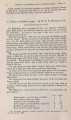
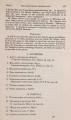
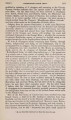
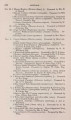
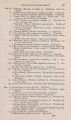
Show 1884.] SPECIES O F O R E A S T E R . 61 When we oppose these facts to those which we have already learnt as to the growth-changes in 0. armatus, we are met at once by the obvious reflection that the very conditions of the case are exactly reversed. In the one we have the progressive growth ; in the other the as marked decline in the size of the spines. When we go further and seek, as we are bound to do, for some explanation, we find that, firstly, the explanation will probably be of this character: Corresponding to the differences in the growth-characters of the spines, there are differences in (a) the length of the free and unprotected portion of the arms, which have become proportionately shorter as the means of defence has been lost; or ((3) there has been a consolidation of the skeletal plates, which, becoming thereby stronger, are the better able to withstand attacks from without. Either of these structural characters could be easily enough investigated and demonstrated by a cabinet naturalist; but in the case now being studied there is not either that concentration or consolidation, which nations as well as individuals have to suffer, when their means of offence or defence are diminished or insufficient. An explanation must therefore be found in a study of living specimens, with a view to see whether they are provided either with protective colourings or offensive odours ; or in the examination of the environment of the Starfish, and the possible absence of creatures strong enough to prey on it. Should the latter be the case, the comparatively rich development of spines in the younger forms would be explained as due to the influence of heredity. In the classification and description of the species of Oreaster it will, for the future, be necessary to bear in mind the two opposing conditions represented by 0. armatus and O. occidentalis respectively, and to endeavour to supplement the technical zoological description of the adult by a history of the growth of the species ; for Starfishes, as for birds or monera, the life-history is an essential factor in an intelligent arrangement. Speculations and considerations such as have here been briefly sketched will not be barren of result if they direct the student of living forms to the closer observation of environment, and to the conviction that faunal lists and lists of collections have a scientific value far above that of a mere catalogue, if to a knowledge of the existence of a given species we can add something of its relations to those other forms with which it lives, and on which it is as dependent as are they on it. In this way some of the dangers of specialization may be diminished if not averted. I. List of the apparently distinct Species of Oreaster. 1. affinis, M . Tr.xp. 46. 2. alveolatus, Perrier,2 p. 243. B.M. 3. armatus, Perrier, p. 251. B.M. 4. australis, Liitken,3 1871, p. 252. 1 M . Tr. = ' System der Asteriden ' by Miiller and Troschel. 2 Perrier=Revision des Stellerides par E. Perrier. 3 Liitken = Videnskabelige Meddelelser, distinguished by the year. |