| OCR Text |
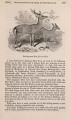
Show 208 VISCOUNT POWERSCOURT ON THE [Apr. 1, After all the Deer had been there for a year there was a remarkable improvement in their health, from the extent and variety of pasture which they had there, and the Wapiti as well as the Sambur and Red Deer improved very much. But unfortunately one of the Red Stags had a fight one day with the Wapiti, and, being more active, gave him a thrust and broke his hind leg, just below the hock. W e managed to secure the wounded Wapiti and to set the leg ; but although the bone knit, and he could put his foot to the ground, he never recovered, but dwindled away and died. I then sold the remainder of the Wapiti to an agent of King Victor Emmanuel of Italy. The Sambur Deer lived for three or four years, and as there was no male (one which I had got from the Royal Collection at Windsor having died), there were several hybrids born, no doubt between a Red Stag and the Sambur hinds, but one by one, both the pure Sambur and the hybrids died off, until there were none left. The climate was evidently too damp for them. It was a curious thing with the Sambur Deer, and it was no doubt the cause of their death, that they never would come out of the thickets in the daytime. They unfortunately could not be taught that Ireland has not a tropical climate, and they used to skulk in the thickest cover they could find, out of the sun, all day, and only came out to feed at night, as they would in the jungles of Mysore, where I have seen them pursuing the same tactics. Of course by this unnecessary precaution on their part against the meridian rays, of which we should like to see a little more in this country than we do, they got chilled through, and eventually died. In the meantime, on a visit to Jamrach I had seen some Japanese Deer (Cervus sika) ; and I thought that as the climate of Japan is a pretty severe one in winter, I would try if they would succeed any better than the other species. I bought therefore one male and three females ; and these have been the only Deer of any newly introduced kind which have been a real success. The Llamas and other animals all died off; and these pretty little Deer are the only ones which have multiplied, and have also never required any shelter of any kind nor any winter-feeding except what the ordinary Red Deer and Fallow Deer get, such as hay &c. I find that Indian corn is the best food for all Deer after hay. It is easily given, and there is no waste, as they pick up every grain as soon as thrown out to them. I tried locust beans, which are good but expensive, and also oil-cake, but they do not eat that up so clean as the Indian corn, and if the weather is wet it melts away. There should be rock-salt always given to Deer, in places where it can be put, in a shed of some kind, so as not to be exposed to wet. These Japanese Deer were put into the park at Powerscourt about the year 1860, and at present (1884) I have upwards of 100 of them, besides having shot two or three yearly, and also having given away a great many and sold others. |