| OCR Text |
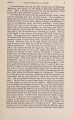
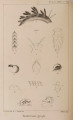
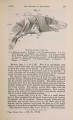
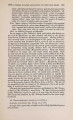
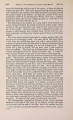
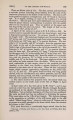
Show 612 SURGEON F. DAY ON INDIAN FISHES. [Dec. 9, below. Dorsal fin with a dark margin edged with white, and the posterior portion of the second dorsal spotted. Anal edged with black. Pectoral and ventral white. Caudal barred in about six lines on either side of the fin. Head dark in its anterior portion. Two specimens up to 4 inches were brought from the Andaman Islands and presented to the Museum by Dr. J. Anderson. One specimen, 3 inches long, from the same locality was presented by Capt. Hodges, who also gave what appears to be the same species 1T 7^ inch long, but wanting both the crest and orbital tentacle. In the Museum I find the specimens of Saccobranchus considered to be the S. fossilis, Bloch, and that to be identical with S. sincjio, Ham. Buch. Dr. Gunther, however, in his elaborate * Catalogue of Fishes' (vol. v. pp. 30, 31), holds a different view. Having taken some trouble to elucidate this question, I will here offer a few reasons for dissenting from this division (as it appears to me) of the species. Dr. Giinther's diagnosis may be summed up as follows :- S A C C O B R A N C H U S SINGIO. A. 68 to 70 rays. Height of body =r length of head =r of the length of the body. Eye 2 diameters from end of snout. Maxillary cirri extend to or beyond the pectoral fin ; pectoral spine \ of length of head. Ventral fin reaches to third or fourth anal ray. A notch between anal and caudal fin. SACCOBRANCHUS FOSSILIS. A. 70. Height of body \, length of head \ of the length of body. Eye 3 diameters from end of snout. Maxillary cirri extend to middle or end of the pectoral fin ; pectoral spine | as long as head. Ventral fin reaches the origin of the anal. Anal and caudal fins scarcely separated by a notch. First, as regards coloration, it is no criterion in this species. In Burmese specimens, as a rule, there are two longitudinal yellowish-white bands; this I have never seen in India. Next, as regards fin-rays. Out of thirty specimens I found as wide a variety as from A. 60-79, yet the species was evidently the same in all. The height of the body depends on the time of year, whether they are captured from sluggish streams or tanks, or from localities well or badly supplied with food. Thus, out of several from one tank at Pegu, where food was plentiful, the height of the body was from - to j of the length of the body; in Malabar ~ of the same; in Mysore p of the body. Were the depth alone of much specific value, some of the Burmese species would differ from the Malabar, and those again from the Mysore ones. As to the length of the head, out of thirty specimens it differed from gi to j of the length of the body. The size of the eye differs with age, as does also the pectoral spine. As regards the notch between the anal and caudal fins, its comparative size varies considerably. There is one subject, however, to be kept in mind respecting this |