| OCR Text |
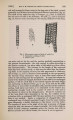
Show 1869.] MR. SCLATER ON CONTINENTAL ZOOLOGICAL GARDENS. 527 Teeth rather coarse in both jaws, none on the palate. Fins. Ventral commences in the posterior third of the distance from the orbit to the base of the caudal fin; it is short, only extending halfway to the anal. Caudal rounded. Colours. Silvery stripe distinct, end of mandible milk-white. Many specimens exist, from the Calcutta bazar. This species is also found in Burmah. The specimens in the Museum are labelled ('H. ectuntio, H. B." November 25, 1869. John Gould, Esq., F.R.S., in the Chair. Mr. Sclater spoke of the condition of the various Zoological Gardens on the Continent which he had visited during the vacation, and made remarks on the new and rare animals observed in these establishments. _ At Rotterdam, in the Gardens of the Zoological Society of that city, one of the chief attractions noticed was a pair of the Anoa of Celebes (Anoa depressicornis). These had already bred once in the Gardens, and a second calf was shortly expected. A bird which Mr. Sclater had not previously seen alive was an African Spoonbill (Platalea chlororhyncha). At Amsterdam, the Gardens of the Society "Natura artis ma-gistra" were found to be in their usual excellent state of arrangement and condition. One of the best living series lately brought together here was that of the genus Bos and its immediate allies, amongst which were examples of the male, female, and young of Bos sondaicus. The Zoological Gardens of Hamburg, now under the direction of Dr. F. Hilgendorf, C.M.Z.S., had recently acquired specimens of many very interesting and little-known species, amongst which might be specially noticed examples oi Bassaris astuta and Tapirus indicus, and a pair of Otocyon delalandii, all formerly represented in the Society's collection, but not now. A fine male Kudu (Strepsiceros kudu) seemed to be in excellent condition, but was, unfortunately, without a mate. The rarest bird in the collection was, perhaps, Numida vulturina, represented by two specimens. Two examples of the rare West-African Monkey Cercopithecus erythro-gaster* had been likewise recently obtained, but had died and were now in the Museum of the city. The Zoological Gardens of Berlin were about to be disconnected from State control, and to become the property of a new Society, whereby large means would be obtained for their augmentation and improvement. Dr. Bodinus, now Director of the Gardens at Co- * Gray, P. Z. S. 1866, p. 168, t. xvi. |